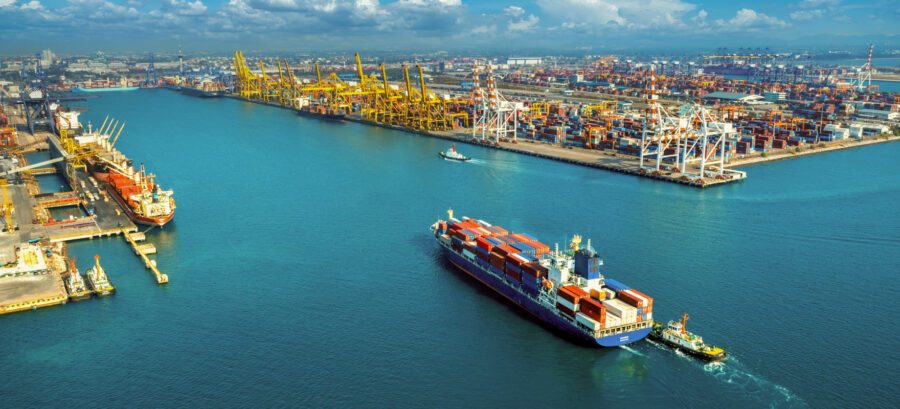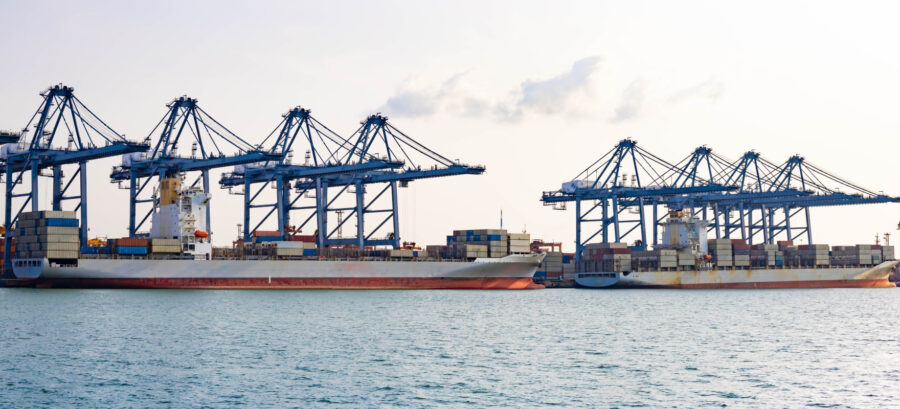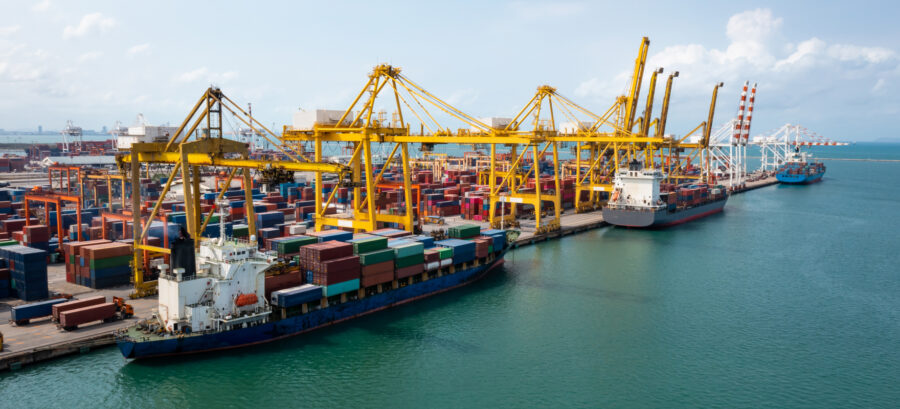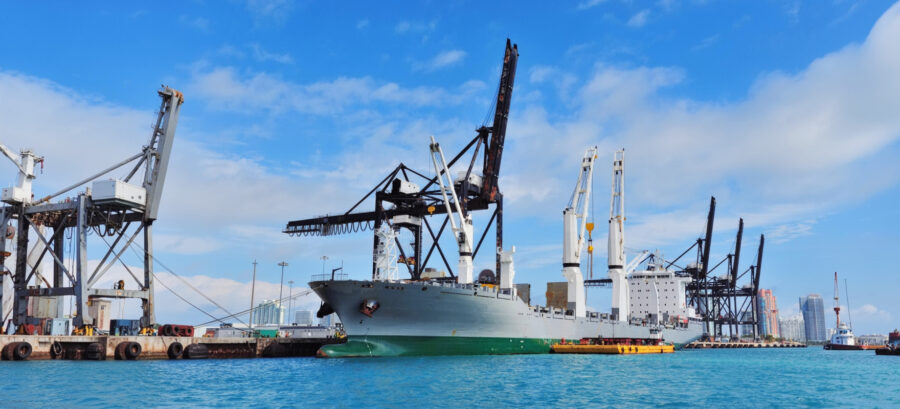
Angola’s port system cannot be understood through container traffic alone. Containers are an important part of the country’s maritime trade, but they coexist with large volumes of liquid and dry bulk, breakbulk cargo, vehicles and other cargo flows. At the same time, Angola’s major ports do not perform identical roles within the logistics network.
Luanda remains the country’s principal maritime gateway and serves the most populous and economically active part of Angola. Lobito is increasingly connected to a much wider regional logistics system through the Lobito Corridor, linking the Atlantic coast with inland markets and resource-producing regions in the Democratic Republic of the Congo and Zambia.
These differences matter operationally:
- A terminal supporting national imports and exports faces one combination of vessel, yard, cargo release and landside processes.
- A port connected to an international rail corridor faces another.
- Terminals handling several cargo categories need yet another set of planning, storage, equipment and documentation rules.
Angola therefore provides a useful example of a broader port-industry principle: port digitalization has to reflect the actual logistics role of the facility, not simply the amount of cargo it handles.
Why Angola’s Port Market Cannot Be Measured by Containers Alone
Container throughput is often one of the first metrics used to compare ports. In Angola, however, looking only at TEU would leave a large part of the operational picture invisible.
Official Port of Luanda statistics show that the port handled approximately 16.64 million tonnes of cargo in 2024. Liquid bulk represented about 7.95 million tonnes, or almost 48% of the total. Containerized cargo accounted for around 5.89 million tonnes, or 35%. Solid bulk and breakbulk added approximately another 1.4 million tonnes each. In other words, more than half of the cargo handled by the country’s main port was not containerized.
Meanwhile, different cargo categories create different operational objects:
- A container is identified individually and moves through predefined yard positions.
- Bulk cargo may be controlled through weight or volume and associated with tanks, stockpiles or dedicated storage areas.
- Breakbulk cargo varies in dimensions, packaging and handling requirements.
- Vehicles require their own identification, inspection and positioning logic.
A port environment containing all of these flows therefore cannot be managed as if every shipment followed the same operational process.
Luanda: Angola’s Main Maritime Gateway
The Port of Luanda occupies a central position in the country’s logistics network. It’s described as Angola’s main seaport and most important logistics infrastructure, estimating that around 80% of the country’s import and export traffic passes through it. The port is also connected with inland destinations by road and rail.
This gateway role creates an operating environment where the marine and landside sides of the supply chain are closely connected.
Imported cargo may need to move through:
- vessel discharge;
- terminal storage;
- documentation and clearance;
- cargo release;
- truck or rail operations;
- onward transportation to inland destinations.
Export cargo moves through the same network in the opposite direction.
The operational challenge is therefore broader than processing the vessel efficiently. Cargo may have been discharged successfully but still remain inside the terminal because the next part of the logistics process is not ready. A truck may arrive while documentation is incomplete, and equipment planning at the quay can affect yard workload later in the shift.
For a gateway port, performance increasingly depends on how well vessel, yard, cargo and landside processes are synchronized.
The Landlord-Port Model Adds Another Layer of Coordination
Luanda is also interesting because of how the port is organized.
Empresa Portuária de Luanda operates under a landlord port-concession model. The public port authority owns and manages the wider port environment, while concessionaires are responsible for investment and commercial development of individual terminals.
Current terminal operators include different companies serving different areas of the port:
- Multiterminais at the General Cargo Terminal;
- Unicargas at the Polyvalent Terminal;
- Sogester at the Container Terminal;
- Sonils at the Oil & Gas Extraction Terminal;
- DP World at the Multipurpose Terminal.
This creates another form of operational diversity. The terminals belong to the same port environment, but their cargo profiles, equipment, processes and commercial responsibilities are not identical.
A container terminal may focus strongly on yard planning, vessel moves and container release.
- A multipurpose facility may combine several cargo technologies.
- Oil-related operations follow a very different handling model.
- General cargo creates its own requirements for storage, identification and equipment.
The landlord model therefore separates certain operational responsibilities while still leaving the port as a connected logistics ecosystem.
Vessels, road infrastructure, port access, regulatory processes and wider information flows do not stop being interconnected simply because different concessionaires operate individual terminals. Digitalization in such an environment has to work on more than one level: inside the terminal and between the organizations that participate in the wider port process.
Angola’s Cargo Mix Is Not Static
The complexity becomes even more apparent when cargo patterns change.
During the first nine months of 2025, the Port of Luanda reported a noticeable shift between cargo categories. Breakbulk cargo increased by 25%, solid bulk by 19%, while containerized cargo decreased by 8% in tonnage. Vehicle traffic increased by 59% compared with the same period of the previous year. The port authority specifically noted that some major importers had shifted cargo from container vessels to bulk shipping because of lower operating costs.
This is particularly important from an operational perspective. Ports are often designed and modernized against forecasts of expected cargo demand, which can change. Meanwhile, the same commodity may move through a different shipping format, importers may choose another transport model, or new customers may introduce cargo with completely different handling requirements.
For a terminal operator, this means that flexibility becomes necessary, since it enables easy adaptation when the structure of the cargo flow itself changes.
Lobito: A Port Connected to a Regional Corridor
While Luanda’s role is strongly connected with Angola’s domestic trade, Lobito illustrates another dimension of the country’s port development.
The Port of Lobito is the Atlantic entry and exit point of the Lobito Corridor, which connects Angola with the southern Democratic Republic of the Congo and northwestern Zambia. The corridor is designed as a wider development and trade corridor connecting inland mineral, agricultural and industrial regions with regional and global markets through Lobito.
This changes the geographical scale of port operations, since the logistics journey may also include mine, agricultural region and inland shipper along with railway, border, Angolan rail network, Port of Lobito and vessel.
The port therefore becomes one node inside a much longer operational chain.
- Cargo arrival depends on railway performance.
- Export planning can depend on inland production and dispatch.
- Documentation may need to move across organizations and national borders.
- Changes in vessel schedules can affect rail and storage planning.
And congestion at one point in the corridor can influence operations somewhere else. Therefore, the development of Lobito strengthens the connection between marine terminal operations and inland logistics execution.
Lobito Is Also Modernizing as a Terminal Environment
The port itself is changing alongside the wider corridor.
The official Lobito Corridor platform states that the concession for the multipurpose and container terminals is held by AGL Lobito Terminal, with investment directed toward infrastructure modernization, new port equipment and digitalization of terminal operations. It reports USD 80 million already invested from a planned USD 200 million program.
This is another useful illustration of the relationship between infrastructure and digital operations.
Modern cranes, rail connections, storage capacity and terminal facilities create physical capability, but using it efficiently requires the operational layer around it to develop as well.
The terminal needs to know:
- which cargo is approaching;
- when it is expected;
- where it will be stored;
- which vessel, train or truck it is connected to;
- which equipment will process it;
- which documents and statuses are required;
- what should happen next.
As port and inland infrastructure become more connected, isolated planning becomes increasingly difficult. The logistics corridor creates value precisely because several transport and cargo-handling stages work together, and the digital environment eventually needs to reflect the same reality.
Luanda and Lobito Illustrate Two Different Logistics Roles
The contrast between Luanda and Lobito helps explain why national port systems rarely benefit from one universal operating model.
Luanda is primarily a major national gateway serving Angola’s largest economic and population center. It handles a broad cargo mix through several concessioned terminals and connects maritime operations with domestic road and rail logistics.
Lobito increasingly combines conventional port operations with the role of an international corridor gateway, linking Atlantic shipping with long-distance rail and cross-border logistics reaching the DRC and Zambia.
This distinction shows how two ports’ dominant logistics relationships differ.
- For Luanda, the strongest operational pressure may come from coordinating high-volume gateway flows across several terminals and inland interfaces.
- For Lobito, increasing corridor activity makes synchronization between port, rail and inland processes increasingly important.
The software environment therefore has to follow the actual cargo journey.
Angola’s Port Modernization Is Becoming Digital as Well as Physical
Angola’s recent port-development agenda reflects this broader transition.
At the sixth round table of the Association of Ports of Angola in July 2026, participants identified digitalization, sustainability, institutional cooperation and human-capital development as strategic priorities for modernization of the national port system.
Recommendations included developing a National Port Digitalization Plan and strengthening interoperability between the country’s port and logistics single-window systems.
Angola already has experience with this type of digital infrastructure.
The Port of Lobito participated in the IMO–Singapore SWiFT project, which developed a Maritime Single Window platform allowing ship-call information required by multiple authorities to be submitted electronically through a common point of entry.
These initiatives operate at a different level from a Terminal Operating System. A Maritime Single Window supports regulatory information exchange around vessel calls. Port or logistics single-window platforms can connect wider communities and administrative processes. Meanwhile, a TOS manages the physical and operational execution taking place inside a terminal.
The systems therefore solve different problems — but as port digitalization matures, their ability to exchange information becomes increasingly important. A digitally connected port ecosystem needs both community-level information exchange and operational execution at terminal level.
What Angola’s Port Structure Means for Terminal Digitalization
The Angolan example highlights several requirements that become important when selecting or developing terminal technology.
Cargo flexibility
The system must reflect different cargo models rather than assuming that every operation is container-based. Containers, general cargo, bulk and Ro-Ro require different identification, storage, planning and execution logic.
Multiple transport fronts
Marine operations increasingly interact with trucks and rail. This is particularly visible around the Lobito Corridor, but gateway operations in Luanda also depend on landside transport.
Configurable terminal processes
Two terminals may perform similar operations in very different ways depending on infrastructure, equipment, concession arrangements and customer requirements. Digital workflows therefore need to reflect the specific operating environment.
Real-time operational visibility
As cargo flows and transport modes become more connected, planners need current information about cargo, equipment, vessels, vehicles, rail operations and terminal capacity.
Integration with external systems
Terminal operations sit inside a larger information environment that may include shipping lines, customers, port authorities, customs and regulatory platforms, rail systems, equipment and other logistics participants.
The greater the number of operational dependencies, the more costly disconnected information becomes.
What a TOS Connects in a Diverse Port Environment
A modern Terminal Operating System provides the execution layer between planning and physical terminal operations.
Depending on the terminal configuration, this can include:
- vessel and berth processes;
- yard and storage management;
- container, bulk, general cargo and Ro-Ro workflows;
- rail operations;
- truck and gate processes;
- equipment task management;
- workforce allocation;
- cargo and transport status control;
- documentation;
- billing;
- reporting and KPI monitoring;
- integrations with external IT systems and terminal equipment.
The real value becomes visible when an event in one part of the terminal becomes immediately available to the next process. For example:
- If cargo arrives, its status and location change.
- If equipment completes a move, the cargo record changes with it.
- If a vessel schedule moves, resource and yard priorities can be reconsidered.
- If a truck or train is expected, the terminal can prepare the corresponding cargo operation.
- If external systems provide new information, terminal execution can respond without employees reconstructing the situation manually.
That is when digitalization begins to connect the terminal rather than automate isolated activities.
How Solvo.TOS Supports Different Terminal Environments
Solvo.TOS is designed to manage port and cargo-terminal operations across different cargo and transport models.
The system supports containers, bulk cargo, general cargo and Ro-Ro and can coordinate processes across vessel, rail and truck fronts. Its functional scope includes cargo and transport movements, equipment and workforce tasks, yard and storage operations, documentation, operational planning, reporting and integrations with external information systems and terminal equipment.
This is particularly relevant in an operating environment such as Angola, where terminals may differ considerably in their purpose.
- A national gateway terminal does not need exactly the same workflow as a corridor-connected port.
- A container facility does not require the same cargo model as a general cargo or Ro-Ro terminal.
- A terminal expanding into new services needs to be able to change its operating rules without separating every new activity into another disconnected system.
The common requirement is a digital operating environment flexible enough to reflect different terminal realities while keeping cargo, transport, resources and information connected.
Different Ports Need Different Digital Logic
Angola’s port development illustrates why regional logistics cannot be reduced to a single throughput number.
- Luanda combines a major gateway role, a landlord management model and an unusually diverse cargo structure.
- Lobito increasingly connects maritime operations with an international inland corridor reaching the DRC and Zambia.
Cargo patterns themselves continue to change, while national port strategy is placing greater emphasis on digitalization and interoperability.
For port and terminal operators, this creates a simple but important conclusion: digitalization should begin with understanding how cargo actually moves through the logistics network. Only then does the technology question become meaningful, because in a port market as diverse as Angola, the goal is not to make every terminal operate in the same way but give each terminal the digital tools required to manage its own role within an increasingly connected logistics system.