
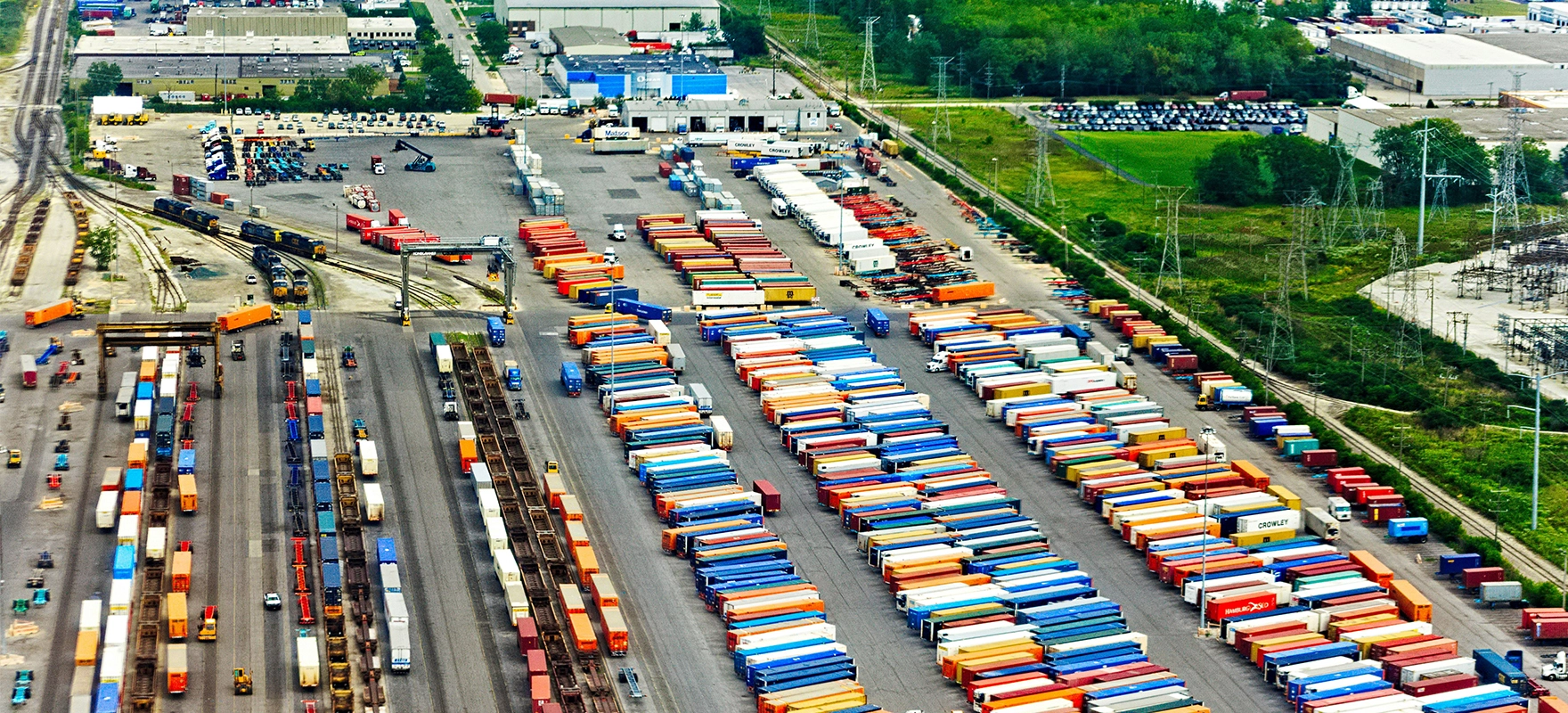
Connect Rail, Road, Yard and Warehouse Operations
Inland terminals and dry ports sit at the intersection of several transport and storage processes. Cargo may arrive by rail, leave by truck, move through the yard or warehouse, and pass through multiple handling stages before its next journey. When these activities are managed separately, delays at one point can quickly create queues, idle resources and unnecessary cargo movements elsewhere.
Solvo.TOS connects rail and road operations with yard, gate, storage and equipment workflows in a common operational environment. Terminal teams can coordinate incoming transport, cargo locations, handling tasks and available resources while maintaining visibility across the full intermodal process.
What Makes Inland Terminal Operations Difficult to Coordinate?
- Inland and intermodal terminals constantly transfer cargo between rail, road, storage areas and other operational zones. If transport arrivals and terminal activities are not synchronized, cargo can spend more time waiting between operations than actually moving.
- Every storage decision affects what happens later. Poor cargo placement can increase rehandling, slow retrieval and make it harder to prepare containers or other cargo for the next rail or truck operation.
- Warehouse, yard and transport processes often depend on the same cargo and the same schedule. When these flows are coordinated separately, trucks or equipment may arrive before the cargo is ready, creating idle time and additional workload.
- Traffic peaks at gates and handling fronts can quickly turn into terminal-wide bottlenecks. Unbalanced truck arrivals or poorly synchronized transport flows create queues, consume yard capacity and put additional pressure on equipment and personnel.
How Solvo.TOS Helps
- Truck flows can be planned before vehicles reach the terminal. Solvo.TOS supports time-slot booking, appointment validation and gate processing, allowing arrivals to be distributed according to terminal capacity instead of managed only after queues appear.
- The terminal layout becomes part of the operating logic. A visual topology model shows storage zones, cargo locations and yard occupancy, while configurable placement rules help determine where cargo can be handled or stored.
- Personnel and equipment can be planned against the actual workload of the shift. Solvo.TOS builds shift-day plans for rail, truck and yard operations, assigns resources and tracks whether planned work is being completed.
- Rail and road processes use the same cargo and operational data. Train schedules, wagon handling, yard movements and truck operations can be coordinated within one environment, reducing gaps during intermodal handovers.
Key Features of Solvo.TOS for Inland Terminals
Cargo & Storage Control
Track containerized, bulk, breakbulk, and Ro-Ro cargo locations, statuses and storage conditions while applying configurable placement rules across yard and terminal storage areas.
Mobile Task Execution
Send handling and inspection tasks directly to tally clerks and equipment operators, with completion results returned to Solvo.TOS in real time.
Customer Web Portal
Give customers and freight forwarders access to cargo information, documents and service requests without relying on email or manual status updates.
Billing & Service Management
Record chargeable terminal operations, manage customer contracts and tariffs, and prepare operational data for invoicing and ERP systems.
CFS & Additional Cargo Operations
Support stuffing, unstuffing, weighing, inspections and other value-added terminal services alongside standard container handling.
See How Solvo.TOS Fits Your Inland Terminal
Tell us how rail, road, yard and storage operations are organized at your facility. We can show how Solvo.TOS can support the processes you already run — and where further automation may bring the most value.
FAQ
What is a TOS for an inland terminal or dry port?
A TOS for an inland terminal or dry port manages cargo movements between rail, road, storage areas and other terminal processes. It provides a common operational environment for planning, cargo and equipment control, gate operations, documentation and integrations, helping intermodal terminals coordinate different transport flows in real time.
Can Solvo.TOS coordinate rail and truck operations at an inland terminal?
Yes. Solvo.TOS supports train and railcar operations as well as truck appointment, gate and yard processes. Rail, road and cargo handling activities can be coordinated within the same system, giving dispatchers better visibility of incoming transport, terminal capacity, cargo locations and operational tasks.
Can Solvo.TOS support both container and non-container cargo at an inland terminal?
Yes. Solvo.TOS supports containers as well as general, bulk, Ro-Ro and other cargo types. Cargo-specific rules can be configured while different flows remain within one operational environment, which is particularly useful for inland and intermodal terminals with a growing or diversified service portfolio