
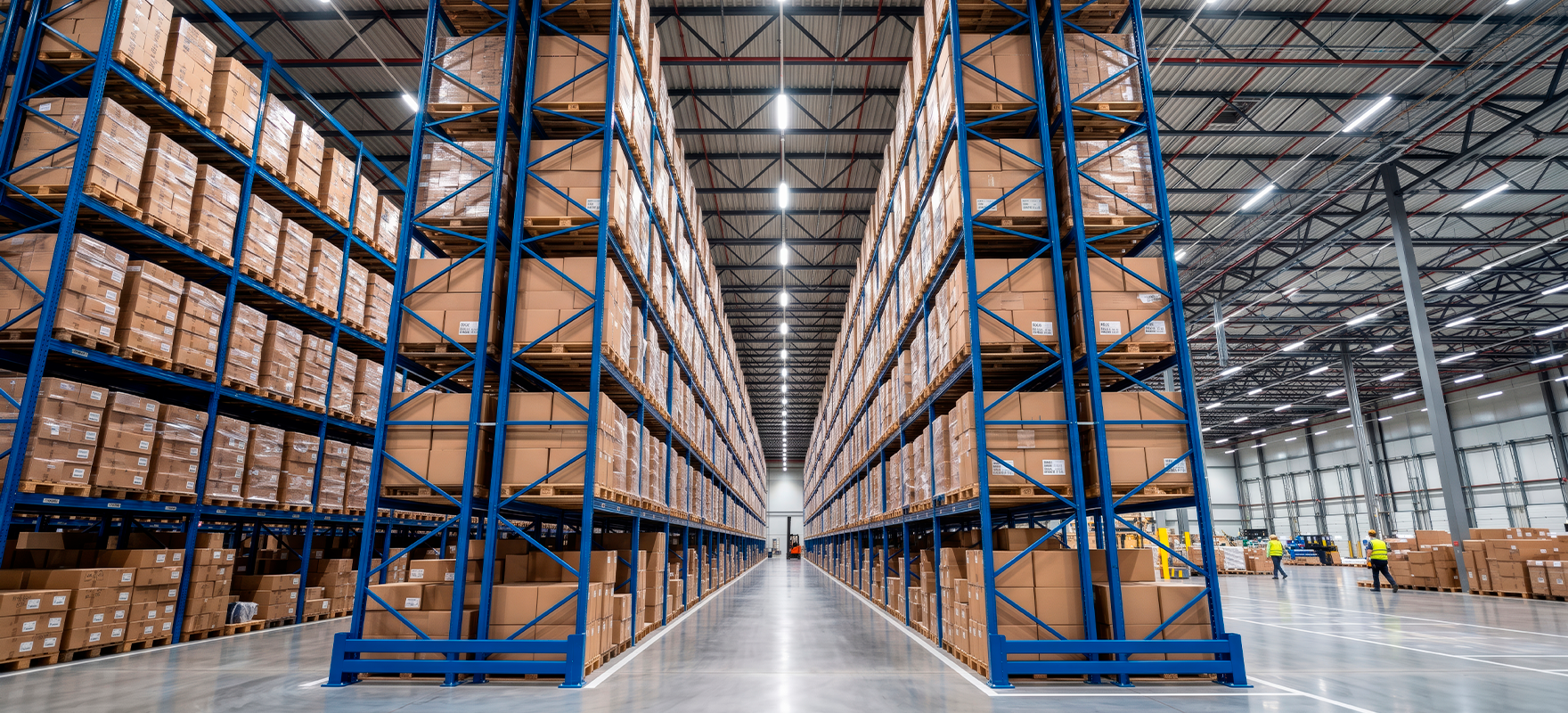
A bonded warehouse management system must control more than the physical location of cargo. Goods may already be identified and stored inside the warehouse while still being unavailable for release because the required customs-related status or other external authorization has not been confirmed.
For a CFS or terminal warehouse, physical inventory and release permission therefore need to work together.
Solvo.WMS connects cargo storage and warehouse execution with relevant statuses received from external systems, allowing the warehouse to maintain control over the cargo while restricting unauthorized dispatch.
How a Bonded Warehouse Management System Supports CFS Operations
The operational challenge can be summarized in one distinction:
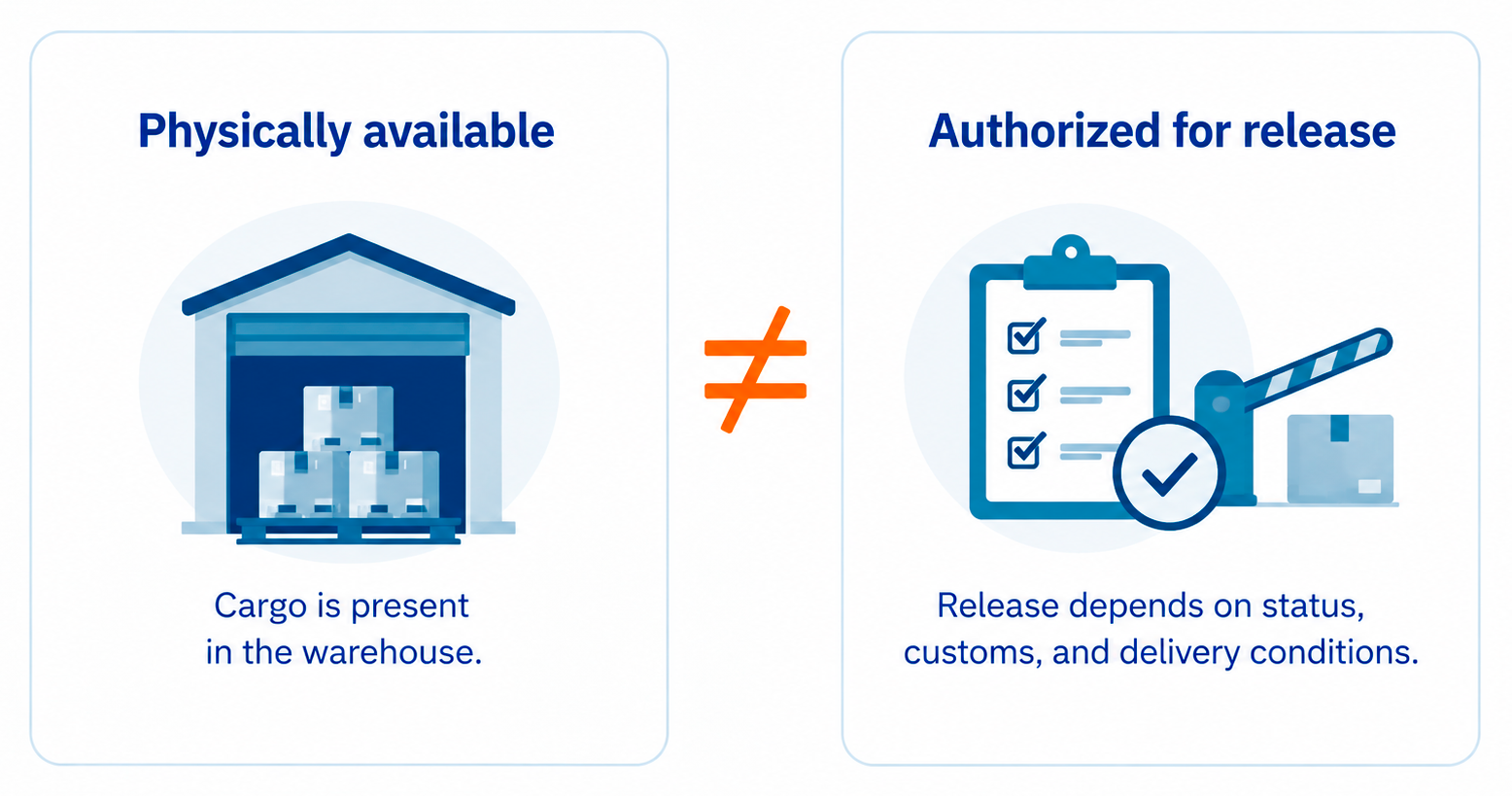
A warehouse employee may be able to see and access a pallet, but that does not mean it should be loaded onto a truck.
The WMS needs to apply the current cargo status when warehouse tasks are created and executed.
This turns customs-related information into an operational warehouse control rather than a separate reference that employees must verify manually.
Customs Status in Warehouse Execution
Solvo.WMS can receive or record external customs-related statuses and retain them alongside the cargo record.
When a required release condition has not been met, the system can restrict dispatch.
Once the appropriate status is received, the cargo can continue through the warehouse workflow according to the configured process.
The operational sequence becomes:
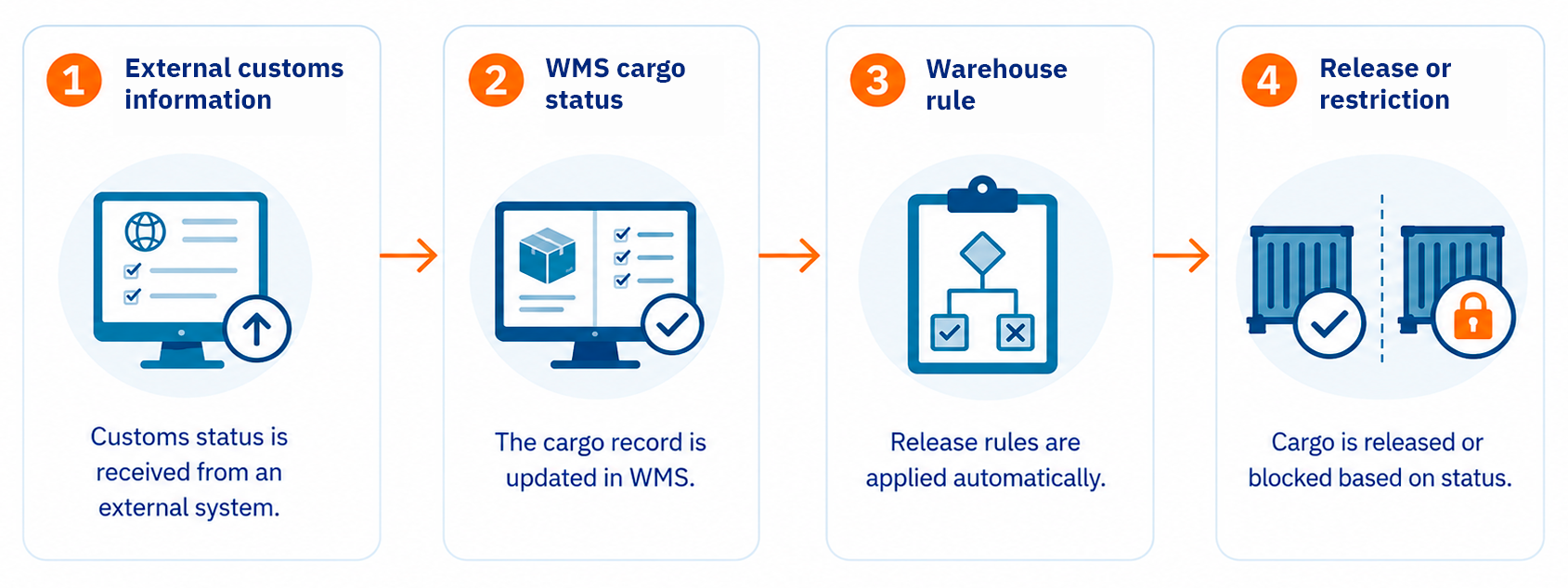
This helps reduce the risk of cargo being dispatched before it is operationally permitted to leave.
Solvo.WMS Does Not Replace Customs Software
This distinction is important for both system architecture and compliance.
Solvo.WMS is a warehouse management system. It should not be positioned as the system that independently prepares, submits or approves customs declarations unless this functionality is explicitly covered by a specific integration or project.
Its role is to use relevant customs-related information within warehouse execution.
The specialized customs environment remains responsible for its own regulatory process; the WMS ensures that warehouse personnel act according to the status received.
Bonded Cargo Receiving and Storage
Physical receiving can follow the same controlled process used for other CFS cargo.
Warehouse operators can:
- identify cargo;
- link it to the relevant receiving document or Bill of Lading;
- register handling units;
- print labels;
- capture weight or dimensions;
- record condition;
- take photos;
- assign the required warehouse status.
After receiving, Solvo.WMS determines where cargo should be stored and creates the appropriate movement tasks.
Physical Location vs. Operational Status
Warehouse location and cargo status solve different problems.
The physical location answers:
Where is the cargo?
The status answers:
What are we currently allowed to do with it?
Solvo.WMS keeps both dimensions connected to the same cargo record.
Depending on warehouse policy, configurable storage rules can also direct specific cargo categories or statuses to designated zones.
This allows bonded facilities to combine physical organization with system-level operational restrictions.
Preventing Unauthorized Cargo Release
The release process can begin with a delivery request.
Before the requested cargo moves to outbound execution, the WMS can evaluate its current status.
Cargo without the required release condition remains restricted.
This is more reliable than requiring an employee to compare the warehouse order with a separate spreadsheet, email or external record before every dispatch.
The same approach can be used within the broader CFS Import Process.
Warehouse Audit Trail for Controlled Cargo
Customs-controlled and bonded operations require clear accountability for physical cargo handling.
Solvo.WMS keeps warehouse operation history as cargo is:
- received;
- stored;
- moved;
- picked;
- staged;
- released.
The system can record when an operation happened and which user performed it.
Photo capture and CCTV integration can add another layer of operational evidence.
This does not replace the official record maintained by customs systems. It provides detailed traceability of what physically happened to the cargo while it was under warehouse control.
Bonded Storage at Dry Ports and Inland Terminals
Bonded warehouse processes are also relevant far from the seaport.
Dry ports and Inland Container Depots can combine:
- container handling;
- customs-controlled cargo;
- CFS stripping and stuffing;
- temporary storage;
- road and rail connections;
- customer collection and delivery.
In such environments, the WMS operates as the cargo-level warehouse layer alongside terminal systems.
See ICD Warehouse Management for Dry Ports for more detail.
Connect Customs Status with Cargo-Level Inventory
The main advantage is not simply storing a customs-status field.
Operational value appears when the status works together with:
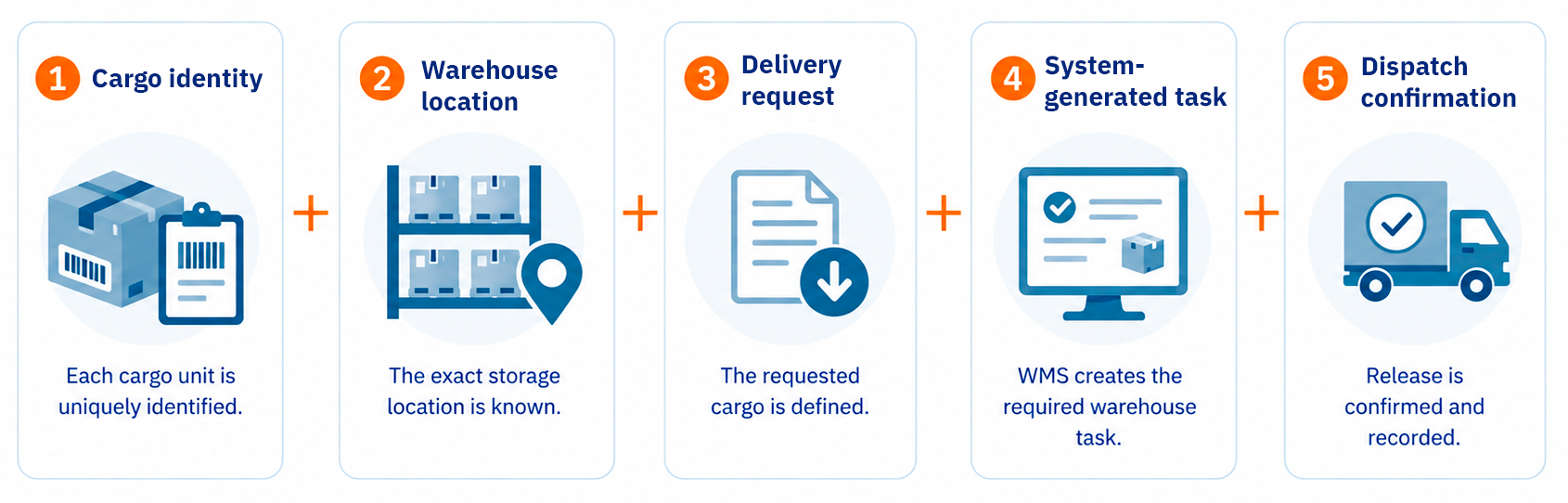
This creates a controlled warehouse process for cargo whose physical availability and release authorization do not necessarily happen at the same time.
Frequently Asked Questions
What is a bonded warehouse management system?
It is a warehouse management system used to control physical inventory and warehouse execution for cargo that may remain subject to customs or other external release restrictions.
Does Solvo.WMS replace customs software?
No. Solvo.WMS can receive or record customs-related statuses and use them in warehouse execution. It does not need to replace the system responsible for customs declarations.
Can cargo remain stored while dispatch is blocked?
Yes. Physical warehouse location and operational release status can be maintained separately.
Can bonded cargo movements be traced?
Solvo.WMS maintains warehouse operation history, including cargo movements, locations, timestamps and users involved in handling.
Connect Cargo Status with Warehouse Execution
Control physical cargo movements while keeping release restrictions visible throughout the CFS process.