Understanding Ro-Ro: Roll-On/Roll-Off cargo, explained —
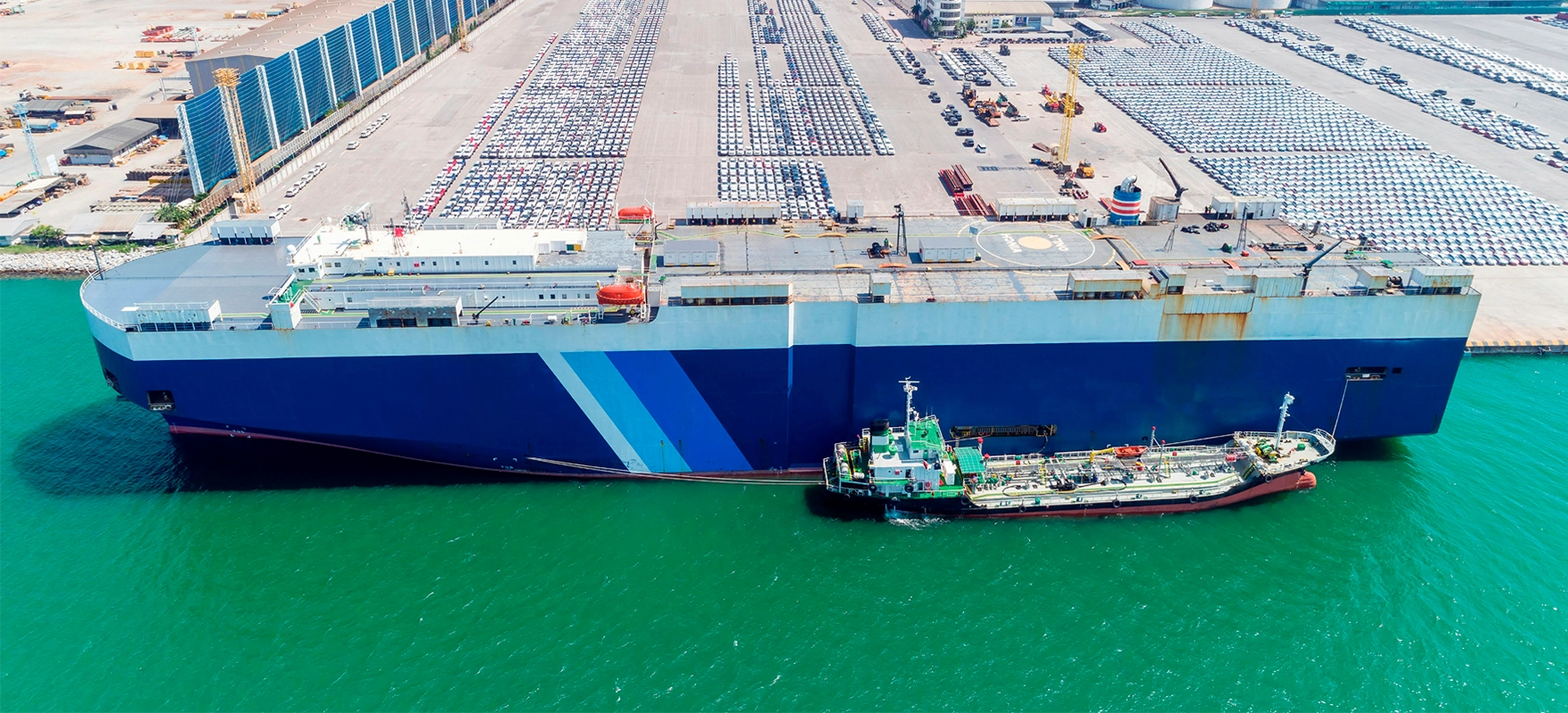
Roll-On/Roll-Off (Ro-Ro) cargo refers to wheeled freight — such as cars, trucks, trailers, and heavy machinery — that is driven on and off vessels using built-in ramps, rather than lifted by cranes. This method reduces handling time, minimizes the risk of damage, and supports high-throughput vehicle flows.
Ro-Ro is a preferred transport method for automotive logistics, construction machinery, and intermodal trailer movements — especially in trade routes with high frequency and time sensitivity.
The operational challenges of handling Ro-Ro cargo
Despite its benefits, Ro-Ro handling comes with specific infrastructure and coordination demands that require specialized tools and planning.
- Infrastructure dependency. Not all ports are equipped with Ro-Ro-compatible ramps, linkspans, or parking zones. This can limit terminal flexibility and require bespoke berth planning.
- Vessel and cargo safety. Ro-Ro vessels typically have open decks and large interior spaces, which can pose stability and fire-safety risks if loading is mismanaged or unbalanced.
- Weather sensitivity. Rain, wind, and poor visibility can significantly affect the safety of drive-on/drive-off operations — requiring fast coordination and clear decision-making across teams.
Efficient Ro-Ro logistics require real-time awareness, tight process control, and minimal manual handling — especially for high-volume vehicle flows.
How Solvo.TOS supports Ro-Ro operations
Solvo.TOS offers a full suite of features designed to help terminals digitize and streamline Ro-Ro workflows, ensuring safer and more transparent cargo movement.
Terminal Topology Visual Editor
- Visualizes the terminal layout in a real-time, isometric 2D interface — showing cargo locations, equipment positions, ramp areas, and vehicle stacks.
- Gives dispatchers and supervisors clear situational awareness for Ro-Ro-specific zones.
Mobile Applications for Vehicle Surveyors
- Enable surveyors to perform on-the-spot inspections of incoming/outgoing vehicles.
- Support photo and video capture of damage or anomalies, with automatic upload to the system for transparent cargo status logging.
Automated Gate Management
- Integrates with OCR and LPR systems for vehicle recognition.
- Controls time-slot scheduling and lane allocation for vehicle entry and exit — reducing queue formation and improving gate performance.
KPI Dashboards and Operational Monitoring
- Tracks key performance indicators across Ro-Ro handling stages — including gate-in to ramp transfer, damage incidents, dwell time, and capacity usage.
- Helps operators identify bottlenecks and enforce safety and service level agreements (SLAs).
Digital Ro-Ro handling, built into your TOS
With Solvo.TOS, Ro-Ro is not a separate process, but a fully integrated part of the terminal’s operational ecosystem.
Whether you’re handling automotive shipments, high-and-heavy machinery, or trailer-based flows, Solvo.TOS enables:
- Faster vessel turnaround
- Reduced manual paperwork
- Safer and more accountable inspections
- Real-time traceability from gate to ramp
- Centralized visibility for all Ro-Ro operations
Ready to take control of your Ro-Ro flow?
Ro-Ro terminals face unique operational demands. Solvo.TOS helps you meet them — with a system that understands your cargo, supports your teams, and keeps your Ro-Ro workflows running smoothly, even under pressure.
Let’s talk about how we can support your terminal.