
What is general cargo — and why does it require special attention?
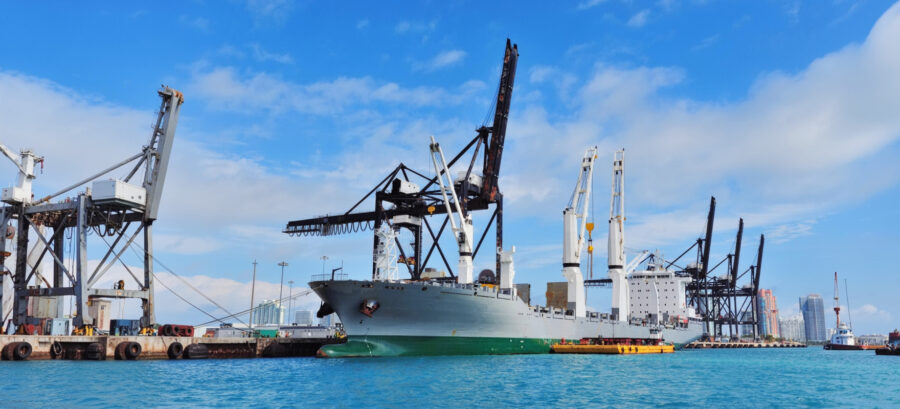
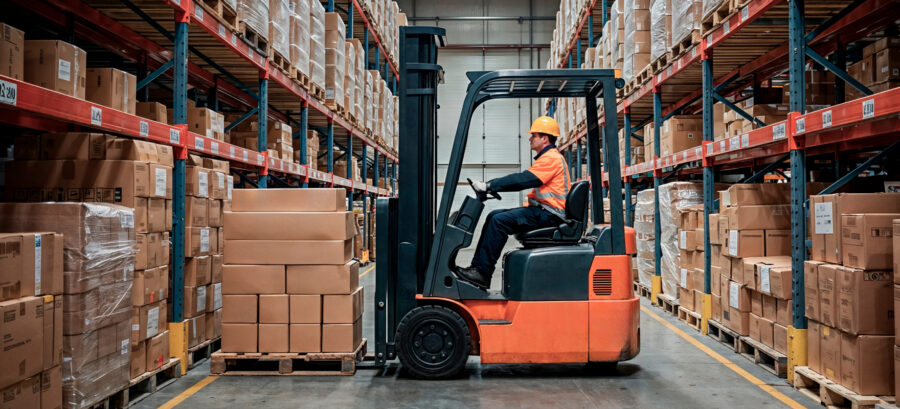
Unlike bulk cargo, which is transported in large, unpackaged volumes (like coal, grain, or liquid), general cargo refers to individually packaged goods: boxes, barrels, bales, crates, bundles, and more.
These items vary widely in shape, size, weight, and handling requirements. They don’t travel in containers, nor are they poured or pumped. And that’s exactly what makes general cargo so complex — it requires hands-on coordination, precise tracking, and adaptable workflows.
The operational reality of handling general cargo
General cargo terminals face a unique set of challenges:
- High diversity of cargo units. Every shipment can be different — in packaging type, stacking method, fragility, or security needs.
- Manual-intensive handling. Items must often be moved, scanned, inspected, or secured individually, increasing the margin for error.
- Space and equipment optimization. Planning how and where to store cargo — and which equipment to use — becomes a puzzle that changes daily.
- Lack of standardization. Without container numbers or uniform dimensions, it’s harder to apply automated rules or use pre-built processes.
This diversity demands a system that doesn’t assume uniformity — but instead adapts to it.
Solvo.TOS: A flexible, real-time solution for general cargo
Solvo.TOS is built to handle complexity — not just scale. For terminals dealing with general cargo, it provides the structure, traceability, and flexibility required to bring order to operational diversity.
1. Centralized Data Management
Solvo.TOS acts as a single platform for managing all cargo types, including irregular and non-standard freight. From inbound receipt to storage location to outbound dispatch, every unit is accounted for — with no need for parallel spreadsheets or external logs.
2. Real-Time Tracking
The system provides live updates on cargo movement, location, and status — allowing operators to monitor flow, identify bottlenecks, and make faster decisions. Whether it’s a crate being repositioned or a barrel pending inspection, nothing moves without visibility.
3. Customizable Workflows
General cargo demands flexibility — and Solvo.TOS delivers. Terminals can define custom handling rules, multi-step workflows, and equipment logic based on cargo characteristics, storage zones, or client requirements.
This adaptability ensures the system reflects real-world complexity, not theoretical models.
Why it matters
In general cargo terminals, the cost of poor coordination is high: damaged goods, unaccounted units, wasted space, lost time. By digitizing these operations and applying logic to diversity, Solvo.TOS enables terminals to:
- Reduce manual errors
- Improve cargo security and traceability
- Streamline resource allocation
- Enhance customer service with clear, auditable status updates
And because it’s the same platform used for container, Ro-Ro, and bulk cargo, Solvo.TOS keeps everything under one digital roof — reducing training needs, system fragmentation, and IT overhead.
Ready to bring clarity to complexity?
If your terminal handles general cargo, Solvo.TOS gives you structure without rigidity — helping you manage every unit, every movement, and every exception with accuracy and control.
Let’s talk about how Solvo.TOS can make general cargo feel just as streamlined as containers.