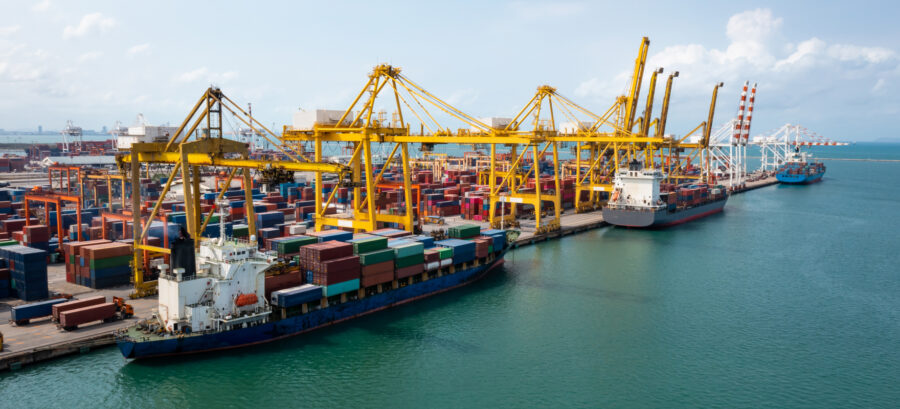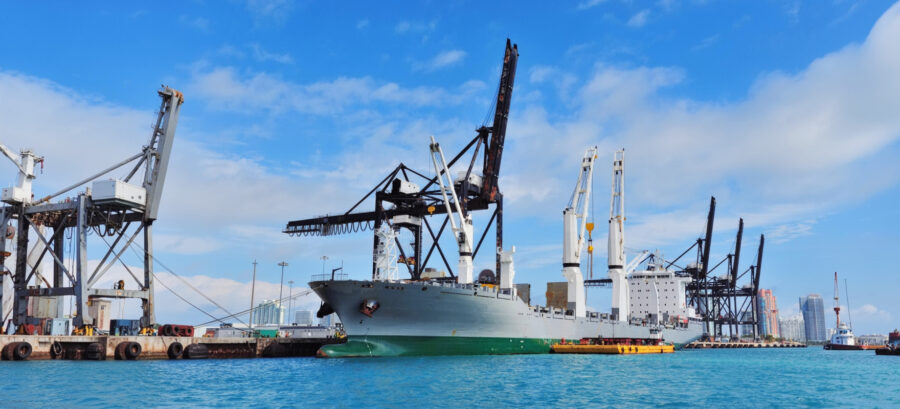

Smart berth planning unlocks the full commercial potential of terminal infrastructure —
In modern container and mixed cargo terminals, berth planning plays a crucial role in overall terminal productivity and profitability. A port may invest in the best equipment and hire the most qualified staff, but without a well-structured berth plan, operations can quickly become chaotic — or worse, costly.
The Challenge: Maximizing Every Meter and Every Minute
The goal of berth planning is to assign vessels to specific segments of the quay wall and time windows in a way that maximizes throughput and minimizes delays. When this is done effectively, a terminal can operate at full capacity, with no idle cranes, no wasted shifts, and no revenue lost to underused assets.
But when planning is inefficient — either due to overlaps, bottlenecks, or large idle windows between ship calls — ports pay the price. Two ships scheduled too close together create conflicts that force one vessel to wait, triggering demurrage fees and damaging the terminal’s reputation. Too much space between calls, and valuable infrastructure is left underutilized.
Why Manual Berth Planning Falls Short
Berth planning is more complex than simply assigning slots. Schedules must account for:
- Dynamic vessel ETAs (which can shift by hours or days)
- Physical berth limitations (length, depth, maintenance windows)
- Equipment and labor availability
- Parallel vessel services and operational zones
Making a single change to a planned vessel call may require reshuffling the entire berth schedule. If done manually, this opens the door to planning inconsistencies and human error. Worse, a mistake in berth planning doesn’t just mean a scheduling issue — it ripples across the entire operation: cranes are left idle, yard stacks fill up unpredictably, trucks are delayed at the gates.
That’s why many ports are turning to automation.
The Solution: Visual, Dynamic Berth Planning in Solvo.TOS
Solvo.TOS offers a fully integrated berth planning module designed to eliminate guesswork and reduce manual overhead. The system provides a visual interface — a dynamic horizontal timeline where each vessel is represented as a color-coded block.
Operators can interact with the schedule in real time:
- Drag and drop vessels to new time slots
- Instantly see berth availability and detect conflicts
- Automatically recalculate operational plans and resource allocations
When a vessel’s ETA changes, the system allows quick and safe rescheduling, with all dependent tasks (crane allocation, yard shifts, gate appointments) adjusted automatically. No more juggling spreadsheets or manually coordinating with each department.
Key Benefits of Berth Planning with Solvo.TOS
- Greater berth utilization through optimal slot assignment
- Faster rescheduling in response to real-world delays or early arrivals
- Reduced risk of demurrage and idle time
- Full operational transparency for both planners and operations teams
- Improved customer satisfaction through reliable vessel turnaround
In an industry where time literally equals money, precision planning is not a luxury — it’s a necessity.
With Solvo.TOS, ports gain the tools they need to plan smarter, respond faster, and operate more efficiently. Because when berth planning is done right, everyone benefits — the terminal, its customers, and the entire supply chain.