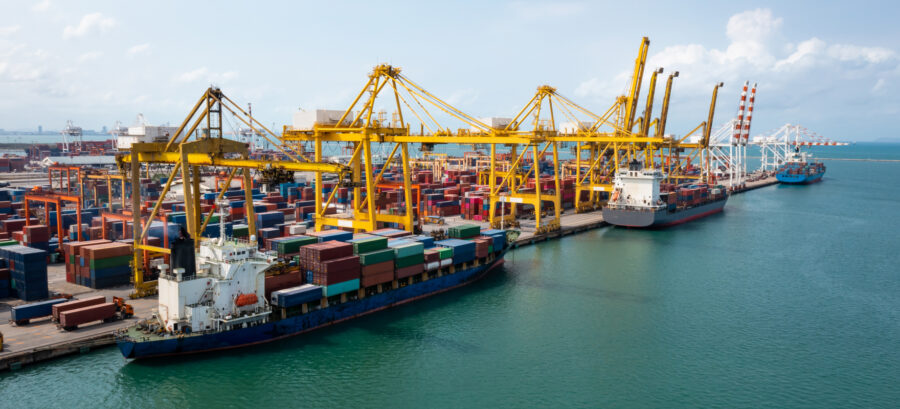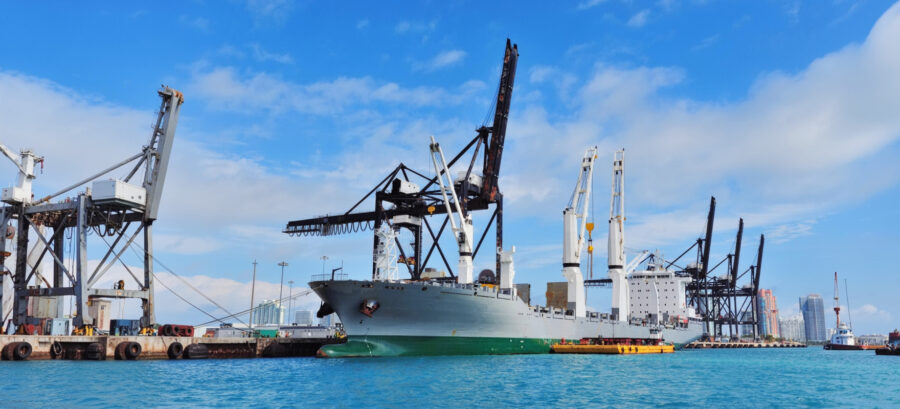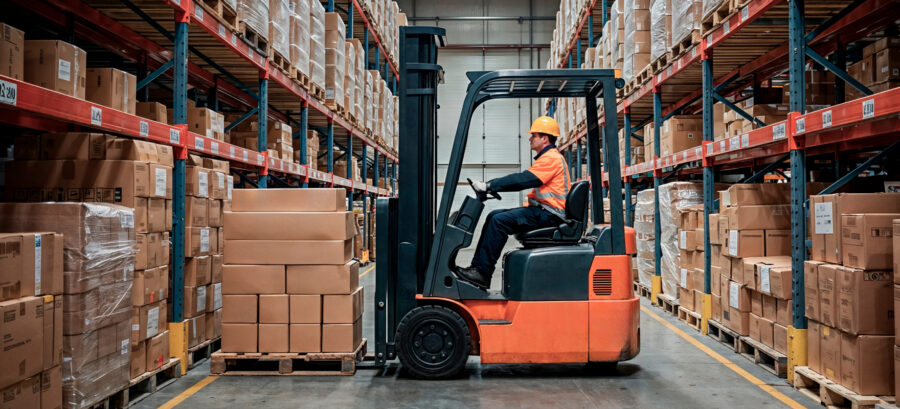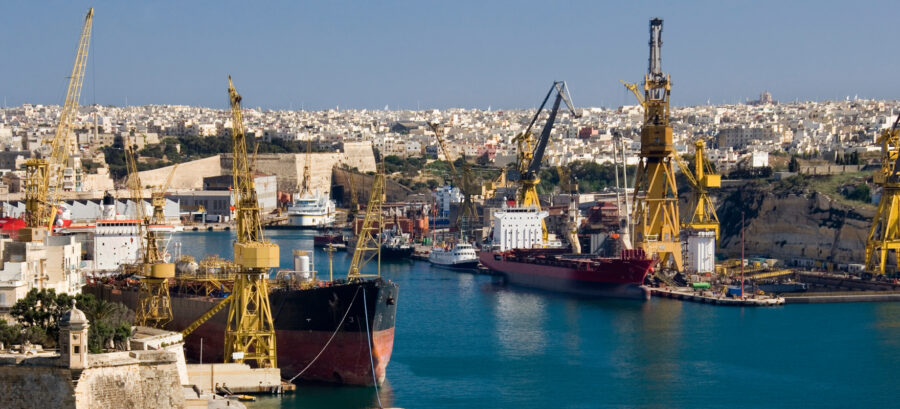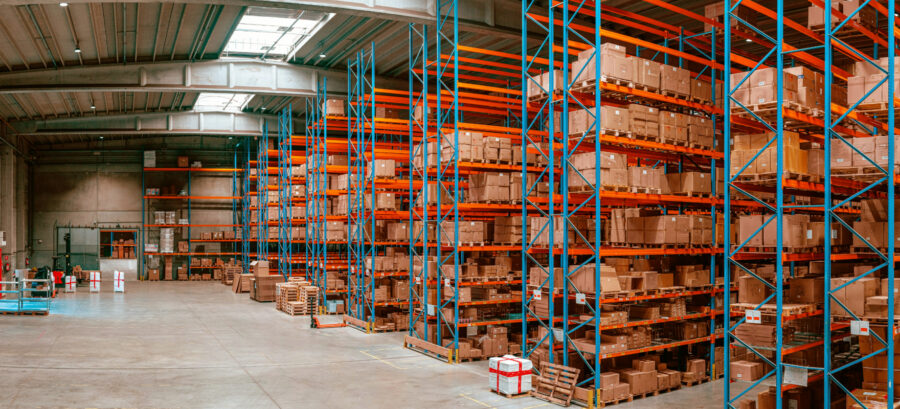
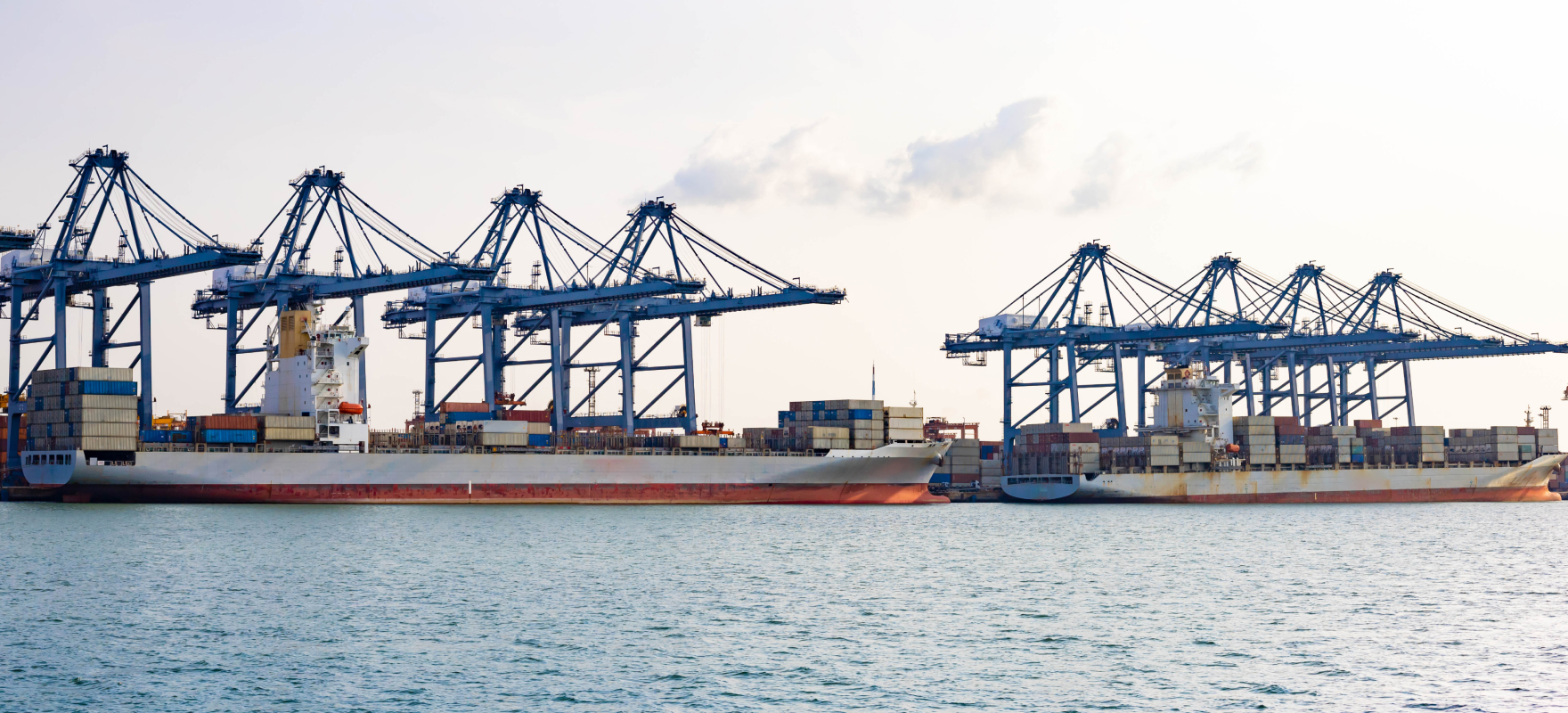
A terminal may face an equally difficult operational problem when several fundamentally different cargo flows have to coexist within the same port environment. That proves that not all port complexity comes from high container volumes.
Egypt provides a useful example.
At Alexandria Port, the Tahya Misr Multipurpose Terminal includes separate operating areas for containers, general cargo and vehicles. Its 400,000 m² handling area was designed for 12–15 million tonnes of cargo annually, while terminal operations are supported by systems including TOS, ERP and OCR-based gate and container recognition technologies.
Sokhna presents an even broader cargo environment. DP World lists containerized cargo, breakbulk, dry bulk and specialized Ro-Ro among its current quayside capabilities, while SCZONE also describes dedicated dry-bulk, general-cargo and liquid-bulk facilities within the port. In 2026, additional general cargo and clean dry-bulk capacity entered operation and further development was announced.
These cargo flows represent much more than different products moving through the same process. A container, a bulk commodity, a piece of project cargo and a vehicle are completely different operational objects. They are identified differently, stored differently, accounted for differently and handled by different technologies. Yet they may still compete for the same berths, yard space, equipment, personnel and landside infrastructure, making multi-cargo port operations a distinct terminal management challenge.
A Multipurpose Terminal Is Not a Few Separate Terminals Standing Next to Each Other
It may be tempting to think of a multipurpose terminal as several independent cargo operations sharing the same address. It seems to make sense, since containers have their process, bulk has another as well as general cargo and Ro-Ro. Operationally, however, this separation only goes so far.
A vessel carrying general cargo may need a berth immediately after a container vessel. The same mobile harbour crane may be required by different cargo operations during the same shift. Trucks serving several cargo flows may pass through a common gate. Storage areas may need to be reassigned as demand changes.
Personnel and equipment also have to be planned against the workload of the entire terminal rather than one cargo department in isolation.
The central problem is therefore two-sided: cargo-specific processes must remain cargo-specific, while shared terminal resources must be coordinated as one operating environment.
Containers: Standardized Units, Complex Movement Logic
Containers are physically standardized and individually identifiable. Each container has its own number, size, type, weight, status, location and transport information. These attributes remain connected to the same physical unit while it moves between vessel, yard, rail and truck operations.
This makes container operations strongly dependent on movement planning: the terminal needs to know not only where a container is now, but also where it must move next, when it will be required and which equipment should handle it.
Storage decisions therefore depend on future operations. An import container expected to leave through the gate follows one logic. A transshipment container waiting for another vessel follows another. Reefers require dedicated areas and monitoring. Empty containers have their own workflows. Even though the physical unit is standardized, the operational context around it is not.
Bulk Cargo: Quantity Becomes the Object of Control
Bulk cargo follows a fundamentally different model. There may be no individual cargo unit comparable to a container number. Instead, the terminal controls material through quantities such as weight or volume, linked to commodities, batches, documents and storage locations.
A bulk operation may need to maintain the relationship between cargo received from a vessel, the amount stored in a particular area and the quantity later dispatched by truck, rail or another transport mode.
Actual measurements also matter: weighbridges, conveyor scales, tank measurements or other equipment may provide operational data that changes the recorded stock balance during handling.
For this reason, bulk terminal software needs a quantitative accounting model rather than attempting to represent the cargo as thousands of artificial individual units.
The Egyptian market provides very concrete examples.
At Sokhna, existing dry-bulk operations include commodities such as sugar, coal and iron ore. SCZONE notes that some cargo flows are directly connected to nearby industrial facilities: the sugar terminal serves a neighbouring refinery, while iron ore and coal support steel and cement production in the surrounding industrial area.
This means that the terminal may need to coordinate not only vessel discharge and storage, but also the requirements of an industrial supply chain beyond the quay.
General and Breakbulk Cargo: Every Shipment Can Be Different
General cargo introduces another type of complexity. Unlike containers, individual cargo units are not standardized. They may differ in dimensions, weight, packaging, storage requirements and handling methods. The same terminal may receive pallets, bundles, pipes, timber, machinery, oversized equipment, big bags and many other cargo formats.
Some shipments need individual identification. Others may be managed as lots or groups. Cargo can also change its operational structure during handling through repacking, consolidation, stuffing or other processes.
Placement rules therefore become especially important. A piece of cargo cannot always be sent to the nearest available location. Its dimensions, weight, compatibility, expected departure, handling method and required equipment may determine where it can safely and efficiently be stored.
The same applies to resource planning. A standard pallet and an oversized industrial unit may both be described as general cargo, but the equipment, personnel and time required to handle them can be completely different.
In July 2026, a new general cargo terminal at Sokhna began receiving commercial vessels as part of the wider port redevelopment program. The first calls included both a bulk carrier and general cargo vessels, illustrating how closely related these flows can become within a multipurpose port environment.
Ro-Ro: Cargo That Moves by Itself
Ro-Ro adds yet another operating model. Passenger cars, trucks, trailers and mobile machinery usually enter and leave the vessel on wheels rather than through conventional lifting operations. The terminal therefore manages not only cargo handling but also vehicle movements.
Individual vehicles may be identified by VIN or another identifier, directed to parking areas, inspected for damage and later sequenced for loading or release.
The physical yard also behaves differently. Instead of container stacks or bulk stockpiles, the terminal may manage rows of individually positioned vehicles. Efficient placement needs to consider future loading sequences, destination and available driving routes through the terminal.
Vehicle condition creates another information requirement. Inspection records, photographs and damage reports can be important for claims management and for determining when damage occurred during the logistics process.
This cargo model is particularly relevant to Alexandria.
The Tahya Misr terminal was built with a dedicated vehicle-handling area alongside container and general-cargo operations, while current development plans for Greater Alexandria include additional Ro-Ro infrastructure at Dekheila Port. In June 2026, the Egyptian Ministry of Transport reported plans for a new Ro-Ro and general cargo facility there, alongside a separate dry-bulk terminal for grains and cereals.
Different Cargo Types Still Compete for the Same Terminal
The individual cargo processes are different, while the infrastructure is not always separate. This is where the real complexity of multipurpose terminal operations appears. For example:
- A terminal may have several vessels approaching the same berth window, while each requires different equipment and handling technology.
- One cargo operation may need additional yard space just as another reaches a storage peak.
- Mobile harbour cranes, forklifts, reach stackers, terminal tractors or other resources may be shared across several operational fronts.
- The same labour pool may also support different operations during one shift.
And although cargo handling technologies differ, many flows eventually converge at the same landside infrastructure: roads, rail connections, gates, weighing points, inspection areas and documentation processes.
This means that optimizing every cargo department separately does not necessarily optimize the terminal. One operation can reach its local target while creating congestion somewhere else.
Cargo Storage Also Requires More Than One Logic
Storage is another area where multipurpose terminals cannot rely on one universal rule.
- Containers are typically allocated to defined yard positions according to container characteristics and planned future movements.
- Bulk cargo may be associated with stockpiles, silos, tanks or dedicated storage zones and controlled through quantity balances.
- General cargo may require individual placement based on dimensions, compatibility and accessibility.
- Vehicles require parking areas that support both safe storage and future driving sequences.
The same physical terminal therefore needs several storage models at once.
A digital terminal topology can provide a common spatial picture while still applying different rules to each zone and cargo type. This is important because yard capacity is not simply a question of how much surface area remains free. The location of that free space determines whether it is actually useful for the next operation.
Documentation Changes with the Cargo Too
Information flows related to different cargo types also vary.
- Containers rely on container identifiers, loading and discharge information, VGM data, shipping-line messages and other container-specific documentation.
- Bulk operations depend heavily on quantities, measurements, commodity data and transport documents.
- General cargo may require detailed descriptions of individual or grouped units, dimensions, weights, packaging and condition.
- Ro-Ro operations add vehicle identifiers, inspection information and potentially damage evidence.
A multipurpose terminal therefore needs to preserve several documentation models without separating them completely from execution. Otherwise, the physical operation may be visible in one system while the corresponding document, commercial or customer information remains somewhere else.
Why Separate Operational Silos Become Difficult to Scale
Separate tools can work when cargo operations are small and independent, but the problem appears as the terminal grows.
If every cargo department maintains its own operational picture, management may lose visibility across shared resources. Equipment availability becomes difficult to evaluate globally. Berth planning may not reflect actual yard pressure. Gate teams may receive incomplete cargo status. Billing may depend on reconstructing services performed in several different systems.
This also increases the amount of manual coordination required between departments.
People begin to connect processes that software does not:
- a dispatcher calls another dispatcher to negotiate equipment;
- a planner checks several spreadsheets before changing a berth;
- a gate employee asks whether a shipment is ready;
- management combines reports from different systems to understand the previous shift.
The terminal may be digitized in individual areas while still being managed through manual communication between them. Multi-cargo digitalization therefore requires a different objective. The task here is to connect different operating models at the points where they depend on each other.
Egypt’s Current Port Development Reinforces the Multi-Cargo Model
Recent Egyptian port projects suggest that this challenge will remain highly relevant.
At Alexandria and Dekheila, development is adding container capacity alongside new Ro-Ro, general cargo and dry-bulk infrastructure. The June 2026 update from the Ministry of Transport described a planned Ro-Ro and general cargo terminal at Dekheila together with a dedicated dry-bulk terminal for grain commodities.
At Sokhna, an agreement signed in March 2026 authorized immediate handling and storage of general cargo and clean dry bulk at Quay 22, while preparing for a dedicated terminal for the same cargo categories. A new general cargo terminal then began commercial vessel operations in July.
These developments matter because they show that multi-cargo operations are not simply a legacy characteristic of older ports. Cargo diversification remains part of current infrastructure investment. As ports expand, the question increasingly becomes how these additional cargo capabilities can be coordinated without creating separate operational islands inside the same port ecosystem.
What a Multipurpose TOS Needs to Coordinate
A multipurpose Terminal Operating System has to operate at two levels simultaneously.
- At cargo level, it must preserve the correct business logic for each flow. Containers remain individually identifiable transport units. Bulk remains quantity-based. General cargo can use individual or grouped cargo records. Ro-Ro maintains vehicle-specific identification and movement processes.
- At terminal level, the system needs a shared operational picture of berths, storage areas, transport fronts, equipment, personnel and current workloads.
This makes it possible to connect cargo-specific execution with common planning.
A multipurpose TOS can therefore support separate handling and accounting rules while coordinating resources across vessel, yard, rail, truck and gate operations. Operational events can feed the same reporting and performance environment, while integrations allow external participants and equipment systems to exchange data with the terminal.
The important principle is that standardization should happen where processes are genuinely shared — not where the cargo itself requires different logic.
How Solvo.TOS Supports Multi-Cargo Terminal Operations
Solvo.TOS is designed to manage container, bulk, general cargo and Ro-Ro processes within a common terminal environment. The system does not treat these cargo categories as versions of one universal cargo object. Different data models and processing rules can be used according to the operational requirements of each cargo flow.
For containers, Solvo.TOS maintains unit-level container records and connects them with vessel, yard, rail and truck workflows. For bulk cargo, the system supports quantity-based accounting using weight or volume and links cargo balances with storage areas and transport operations. General cargo can be tracked individually or in groups while retaining characteristics such as dimensions, packaging and storage requirements. Ro-Ro workflows can use vehicle identifiers and support vehicle movement, positioning and inspection processes.
Above these cargo-specific processes sits the shared terminal layer.
Storage areas can be represented in the terminal topology. Equipment and personnel can be planned against the expected workload. Vessel, rail, truck and yard operations can use the same current operational data. Tasks and execution results remain connected with cargo records and terminal processes.
This allows a multipurpose terminal to preserve operational differences without losing terminal-wide coordination.
One Digital Environment, Different Business Rules
The challenge of multi-cargo port operations can be summarized simply: containers, bulk commodities, general cargo and vehicles should not all be managed in exactly the same way, but neither should they become isolated operational worlds. They share infrastructure, compete for resources and affect each other’s schedules. And eventually, management needs to understand what is happening across the terminal as a whole.
Egyptian ports illustrate this balance particularly well.
Alexandria combines container, general cargo and vehicle operations while continuing to develop new Ro-Ro and bulk capacity. Sokhna combines containerized cargo with bulk, breakbulk, industrial and Ro-Ro logistics and continues to add new cargo-handling infrastructure.
For multipurpose terminals, digitalization therefore should not mean forcing different cargo into one process but creating one operational environment capable of managing several different processes at the same time. That is the difference between simply supporting multiple cargo types and actually managing a multi-cargo terminal.