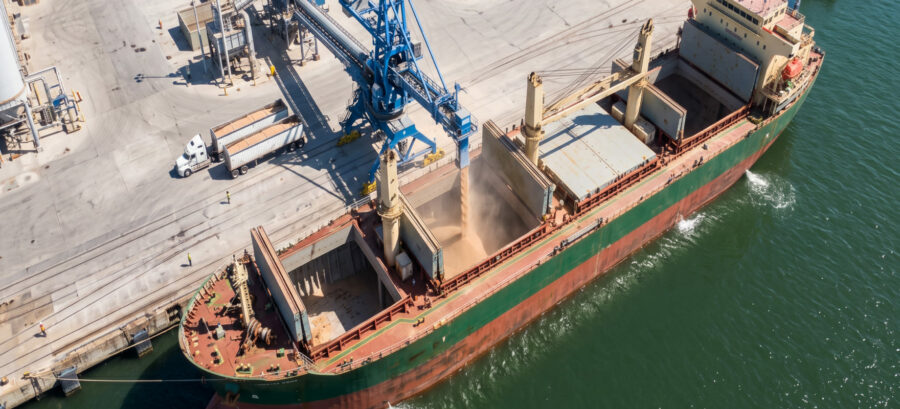
Consider a common scenario: a freight train delivers bulk cargo to a marine terminal. The shipment is unloaded, placed in storage and later dispatched by sea. During its time at the terminal, the cargo may also be weighed, transferred between storage areas or handled in several stages. Each operation simultaneously creates an operational record, and some also represent a service for which the terminal can charge its customer.
But how does the commercial department know exactly what services were performed, how much cargo was handled and how long it remained in storage?
When these details are collected manually from transport documents, spreadsheets and operational reports, invoice preparation becomes a separate exercise in reconstructing events.
Why Bulk Cargo Billing Is More Complex Than It Appears
For bulk terminals, reliable billing depends on a close connection between cargo handling operations, supporting documents and commercial calculations. On the surface it may seem straightforward: identify the service, apply the relevant tariff and calculate the charge. However, in practice, the information required for that calculation is produced throughout the cargo handling process, often by different departments. A railway operations team records incoming wagons, cargo handlers register the quantities received, and storage personnel manage the cargo during its time at the terminal. Dispatch teams document the quantity released to the next transport mode. The commercial department must then turn these operational records into chargeable services.
Bulk cargo introduces several additional challenges.
- Quantities may change during handling. The weight specified in incoming transport documents can differ from the quantity actually received or dispatched.
- Cargo may remain in storage for different periods. Several consignments of the same commodity can arrive on different dates, accumulate in one storage area and subsequently be dispatched in portions.
- Operations may involve several transport modes. The same cargo flow may include railway unloading, terminal storage, internal movements and vessel loading.
- Customers may have different commercial conditions. The applicable services and tariffs depend on the contractual arrangements.
Consequently, a cargo movement record alone is not enough to prepare an accurate invoice. The terminal also needs to establish which services are chargeable, which customer they belong to and what operational data determines their cost.
From Completed Operations to Billable Services
The foundation of terminal billing is the information recorded when an operation is performed.
As an example, let’s consider an export shipment received by rail and subsequently loaded onto a vessel. The terminal may perform several services during this process:
- Railway receipt and unloading. The information relevant to billing may include cargo received, actual handling quantity, transport and customer records
- Terminal storage. Cargo quantity and recorded storage period should be considered.
- Additional handling. Billing should take into account internal transfers or other services performed.
- Vessel loading. Actual quantity dispatched and supporting shipment documents are also relevant to billing.
Whether each operation is billed separately depends on the customer’s contract and the terminal’s commercial rules. The important point is that the operational data already exists as part of the cargo handling workflow. If the billing process uses those records directly, commercial personnel do not have to reconstruct the complete sequence from separate sources.
A terminal operating system (TOS) provides the operational foundation for this approach by recording cargo movements and connecting them with transport and customer information.
Considering Actual Handling Quantities
We need to mention that a planned operation and a completed operation are not necessarily identical. For example, a vessel may be scheduled to receive a particular quantity of dry bulk cargo. However, the final loaded quantity may differ from the original instruction. Similarly, cargo received by rail may be registered in several stages, with quantities determined from transport documents or terminal weighing results.
These differences matter because commercial calculations must follow the applicable contractual basis and the relevant recorded quantities. The quantity requested by a customer, the quantity reserved for an operation and the quantity actually handled are distinct figures. If commercial personnel rely only on preliminary plans, they risk preparing calculations that do not reflect the services performed.
Solvo.TOS.Bulk records cargo receipt and dispatch operations, including actual handling quantities and the related documents. This information can subsequently be used in the billing process without re-entering the same operational details. As a result, we get a clearer connection between the work performed at the terminal and the quantities used for commercial settlement.
Storage Charges Depend on Reliable Cargo Records
Beside cargo handling, terminal billing has another important consideration introduced by storage services: time. A terminal needs to determine how long cargo has remained in storage and which quantity should be associated with the relevant storage period.
This becomes more complicated when several incoming consignments are physically accumulated in the same stockpile. For example, a customer may deliver cargo on several dates and later dispatch it in portions. Although the material may be physically mixed, the terminal still needs to maintain the appropriate documentary sequence for inventory deduction. Where the applicable accounting rules require First In, First Out (FIFO), outgoing quantities are attributed to earlier eligible receipts before later ones.
This distinction can directly affect storage calculations. If earlier incoming records remain outstanding despite corresponding dispatches, the system may continue associating storage time with quantities that should already have been deducted.
Solvo.TOS.Bulk supports FIFO-based inventory deduction independently of the physical arrangement of bulk cargo in storage. This helps maintain a consistent documentary sequence for inventory and storage-duration calculations.
Supporting Documents: Evidence of Services Performed
Commercial calculations become considerably easier to verify when every relevant cargo operation is supported by appropriate documentation.
Bulk terminals work with a variety of transport and operational documents, including cargo receipt records, shipment documents and handover confirmations.
These documents serve different purposes. An incoming document establishes the basis for cargo receipt. Operational records capture the quantities accepted or handled. Dispatch documentation identifies the cargo released from the terminal. A handover document can confirm that the cargo was transferred to its recipient. This last stage is particularly important when a customer or carrier questions whether a particular shipment was released.
Without reliable documentation, the terminal may have difficulty reconstructing the circumstances of a disputed operation.
Solvo.TOS supports the generation and storage of operational documents associated with cargo receipt and dispatch. Cargo handovers can be confirmed through documents signed by the recipient, providing evidence of the completed transfer. These records help connect the physical cargo movement with the documentation required for subsequent verification and commercial settlement.
It’s fair enough to say that document traceability does not eliminate every possible dispute. However, it gives both operational and commercial personnel a consistent basis for examining what happened.
Connecting Terminal Operations with Contracts and Tariffs
Once operational services have been identified, their commercial value must be calculated. This is where operational accounting and billing perform different functions.
The terminal operating system records what happened to the cargo: which quantities were received, stored, handled and dispatched, along with the corresponding dates, documents and customer information. The billing system uses relevant operational information together with the applicable commercial conditions.
These conditions may differ between customers and services. For example, cargo handling and storage may have different calculation bases. The commercial treatment of additional operations also depends on the services included in the relevant agreement.
A connected billing process should therefore answer four questions:
- What service was performed? Identify the completed cargo handling or storage operation.
- For whom was it performed? Associate the service with the appropriate customer.
- What information determines the charge? Establish the relevant quantity, duration or other contractual calculation basis.
- Which commercial conditions apply? Use the appropriate contract and tariff information.
Separating these questions helps prevent operational data from being treated as an invoice without the necessary commercial context.
How Solvo.TOS Provides Billing
The Solvo software environment connects cargo handling operations with the commercial calculations based on those operations.
- Solvo.TOS manages the operational side of the process. For bulk cargo, this includes the registration of receipts and dispatches, tracking of cargo quantities, recording of handling operations and generation of supporting documents. Information about actual handling volumes, storage periods and relevant operations is transferred to the billing environment.
- The Solvo Billing module provides the commercial calculation layer. Using the operational data together with configured contracts and tariffs, the system calculates charges for cargo handling, storage and other applicable terminal services. The resulting information can be prepared for subsequent invoicing through the terminal’s ERP or accounting environment, according to the implemented integration.
The main advantage is that commercial calculations can be based on information already registered during terminal operations rather than on manually reconstructed activity reports. The specific services, tariff rules and downstream integration processes depend on the terminal’s commercial model and system configuration.
What Should a Bulk Terminal Check Before Automating Billing?
Connecting operations and billing requires more than exchanging data between two applications. Before introducing or improving an automated billing process, terminal operators should examine several practical questions.
- Are completed operations recorded consistently?
If handling activities are not reliably registered, the billing process will have incomplete source information.
- Can every chargeable operation be associated with the correct customer?
Cargo owners, forwarders and contractual parties may have different roles in a shipment. The billing process needs to use the relationships established by the terminal’s commercial arrangements.
- Are actual quantities available?
Billing calculations may require completed handling quantities rather than preliminary estimates or shipment requests.
- Can storage periods be established from the cargo history?
This is particularly important for bulk commodities received in several consignments and dispatched in portions.
- Are supporting documents available when a calculation is questioned?
Operational and handover records should provide the information necessary to examine a charge and its underlying activity.
- How will calculated charges reach the invoicing system?
The terminal should define how billing results are reviewed, transferred and processed within its existing commercial and accounting environment.
Addressing these questions helps align the billing configuration with the way the terminal actually operates.