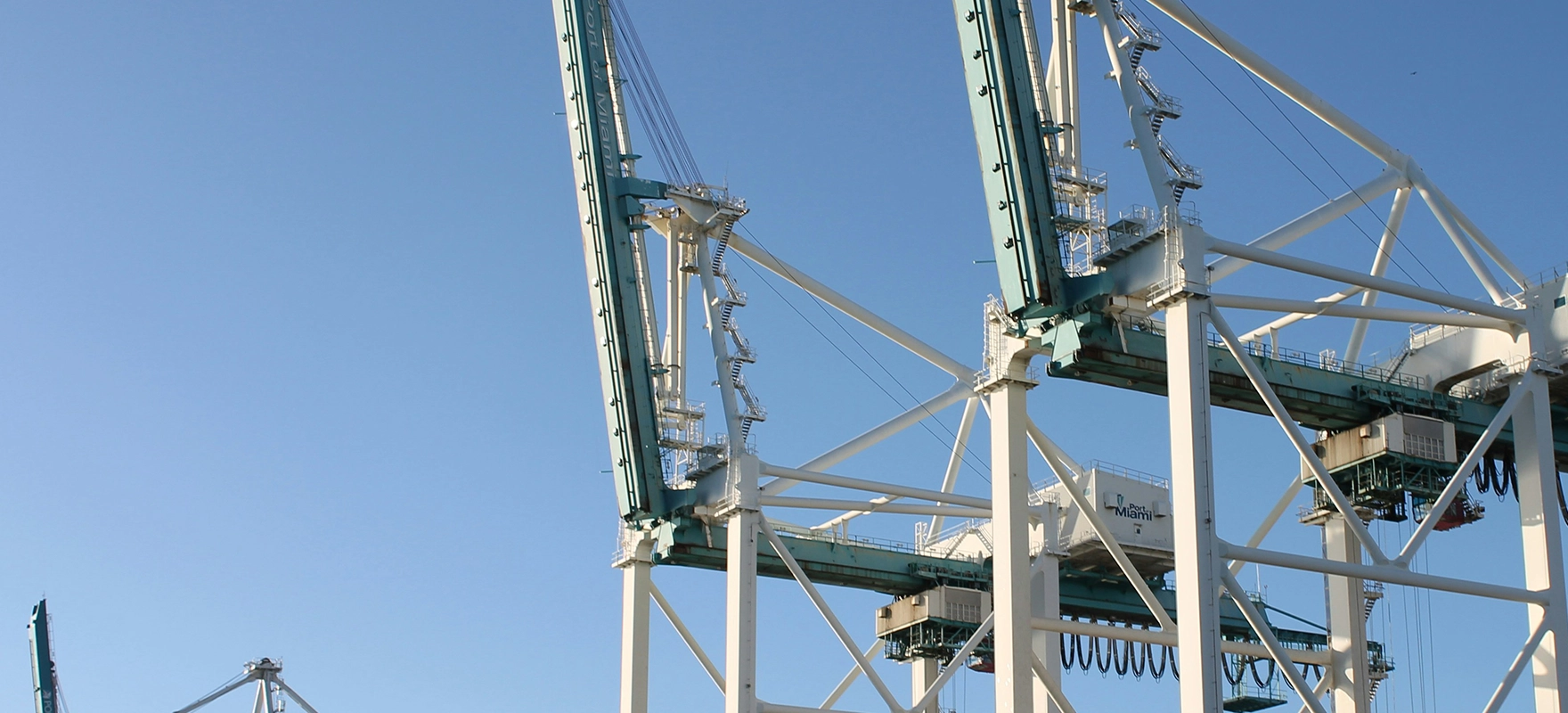
Remote cranes: how they’re made & how they work?
1. What they are
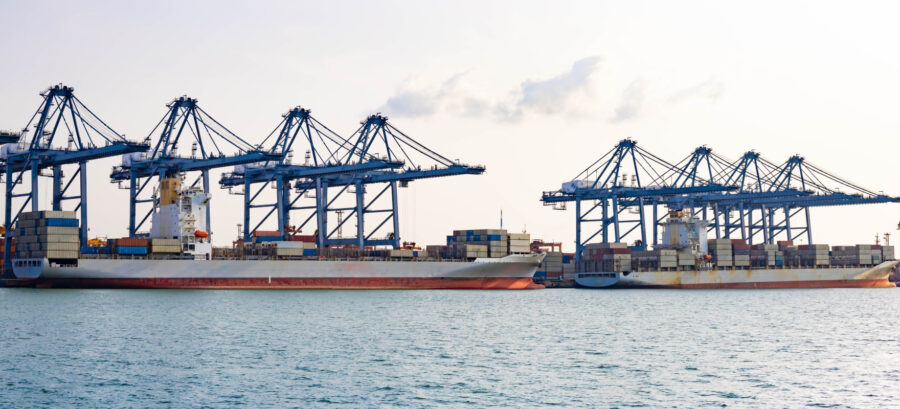
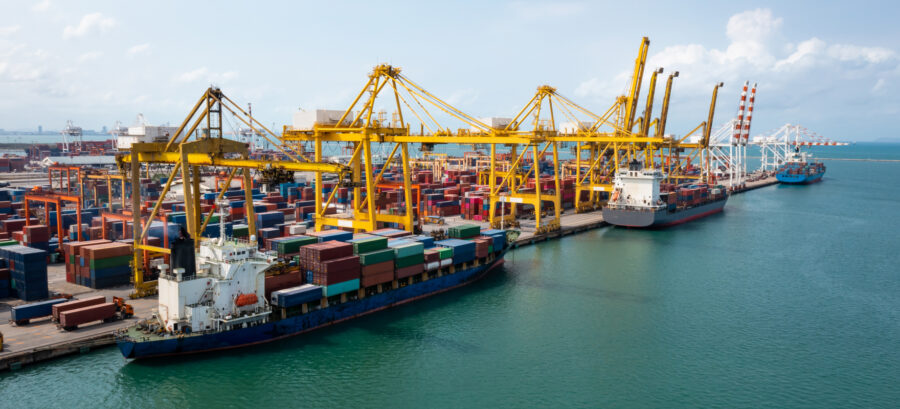
Remote (tele-operated) ship-to-shore and yard cranes move the operator out of the cabin and into a control room. Operators work at ergonomic consoles that stream multi-angle video and sensor data; automation assists (anti-sway, smart hoisting, path guards) handle routine motions, while the human focuses on exceptions and precision placement.
2. How it works (and changes the roles)
Cameras (incl. mast, spreader, and boom views), LIDAR/radar, load sensors and PLCs feed an equipment control system (ECS). Operators handle multiple workstations, with the system sequencing moves and enforcing safety envelopes.
In practice, the job shifts from physical endurance to cognitive orchestration: one operator may supervise a crane continuously and “swing” to another during low-complexity phases, while automation maintains steady, repeatable motion profiles.
Why ports are moving to remote cranes
Below are common operational pains and how remote crane programs address them.
- Bottleneck: Operator fatigue & safety risks
Solution: Ergonomics and safer workplaces
Removing climbs, wind exposure, and whole-shift vibration reduces injuries and fatigue; standardized consoles and climate-controlled rooms improve focus and retention. - Bottleneck: Skilled labor shortages
Solution: Broader hiring pool & better retention
Remote rooms open the role to candidates who might avoid cabin work (e.g., motion-sensitive operators) and make mentorship easier (senior operators can supervise trainees side-by-side). - Bottleneck: Throughput variability
Solution: More stable cycle times
Assisted motion plus consistent visibility improves placement accuracy and productivity, especially in poor weather or night shifts. - Bottleneck: Fragmented tech stacks
Solution: Unified control & diagnostics
Modern remote systems integrate with ECS and yard systems, giving maintenance, analytics and training teams better data and simulation options. - Bottleneck: Brownfield constraints
Solution: Phased adoption
Operators can pilot on select cranes, then expand; terminals have shown stepwise roll-outs on live facilities.
The critical enabler: a mature Terminal Operating System
Remote cranes are not science fiction—they’re already deployable. But the difference between a slick demo and stable 24/7 operations is your TOS. Here’s what a mature TOS must do to make remote cranes pay off (and what Solvo.TOS is built to deliver):
- Multi-cargo, multi-mode orchestration. One platform to plan and execute container, Ro-Ro, bulk and general cargo flows—sea, rail and inland—so crane scheduling, yard strategy and gate plans align without fragile hand-offs.
- Tight ECS/PLC integration. Standard interfaces and vendor adapters allow the TOS to dispatch work to cranes, receive state/alarms, and enforce interlocks with AGVs/straddles and yard blocks—without brittle custom scripts.
- Automation-aware planning. The TOS must output crane-friendly work packages (move groups, twin-lift policies, vessel profiles) and respect automation constraints (no-go zones, safe paths, speed curves) to avoid constant manual overrides.
- Real-time situational awareness. Unified telemetry for quay, yard and gate presents one “truth” for control rooms: job progress, delays, exceptions, and KPI tracking across equipment types.
- Resilience & scalability. High-availability architecture, rollback-safe updates, and proven performance at peak windows—because control rooms depend on the TOS clock-speed, not the other way around.
Our platform is engineered for “all cargo, all modes, one system,” so you can bring remote cranes, AGVs, OCR, reefer monitoring, gate automation—and the next innovation—into the same operational backbone.
For brownfield terminals, that means phasing in remote operation without ripping out core processes; for greenfield builds, it means launching unified from day one. In both cases, our integration toolkit and automation-aware planning remove the need for fragile middleware, cut commissioning time, and keep your control rooms running smoothly.