
How To Store Goods More Efficiently With Solvo.WMS?
In today’s fast-paced logistics environment, leveraging automated goods placement can significantly enhance warehouse efficiency. By integrating advanced automation technologies, companies can optimize storage space, reduce handling times, and improve inventory accuracy. How to utilize automation to streamline warehouse operations?
Solvo.WMS creates rules and strategies for product placement operations. When the system places goods, it takes into account a wide range of parameters – from the type and weight-dimension characteristics of the cargo to the planned shipment dates and the client’s storage preferences.
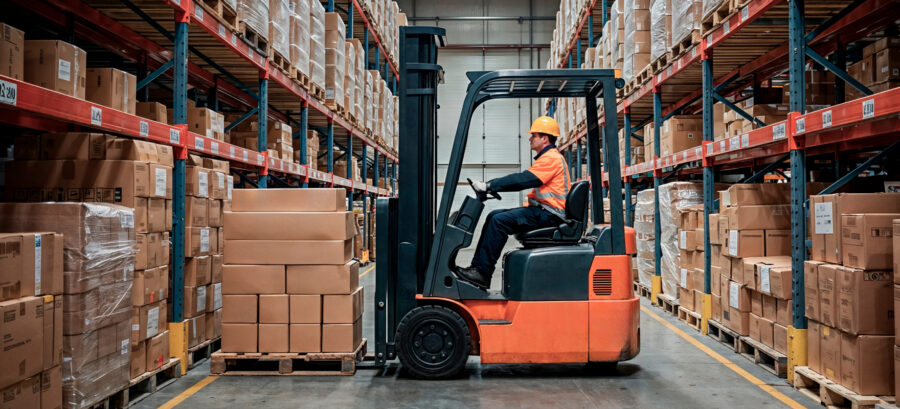
The system monitors the storage zone and recommends the optimal location for cargo placement, factoring in the timing of its subsequent shipment. For instance, if the cargo is scheduled for imminent dispatch, Solvo.WMS will suggest a placement location that allows easy access to the pallet without the need to move other items. Additionally, the loader will receive an optimized route to the designated storage location. For example, after delivering one cargo for storage, it can pick up nearby cargo for shipment.
In addition, Solvo.WMS integrates with a wide range of software and hardware, including loaders, conveyor lines, robotic equipment etc. The system also assigns optimal tasks to the staff. All of this increases work efficiency and reduces the risk of errors.
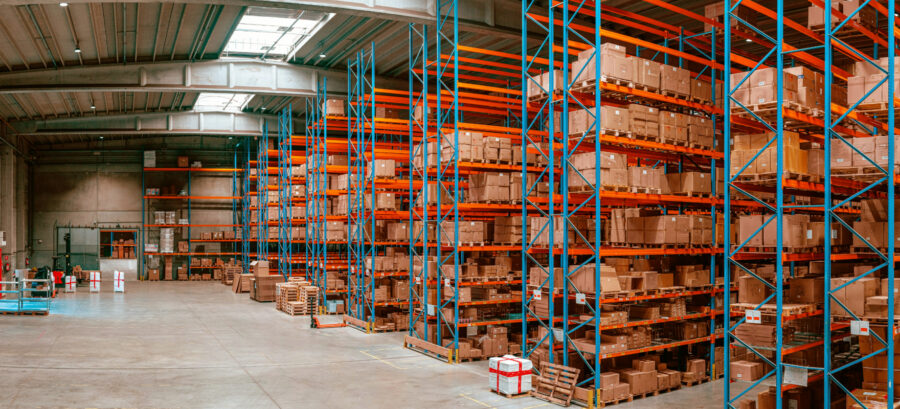
Consider our client’s case as an example. This company imports and exports beverages on a global scale, with its warehouse serving dual purposes: as a storage facility for finished goods and as a distribution center handling up to 50% the picking volume. The warehouse covers 30,000 square meters and has buildings ranging from 6 to 12 meters in height. The total storage capacity exceeds 100,000 pallets, encompassing over 300 SKUs.
How were our client’s issues solved by placement automation?
- Loaders work faster and avoid collisions due to optimized passageways for warehouse equipment through narrow aisles between storage racks: loading is done from one side, while unloading is done from the other.
- Goods for shipment are assembled more quickly thanks to distribution throughout the warehouse, which allows for multiple trucks to be directed for loading operations.
- The time required to move cargo from the conveyor belt to an available storage location has significantly decreased.
- The time and labor required for inventory management have been reduced.
- The warehouse space is utilized at 100%.
And these are just the key performance indicators among many others.