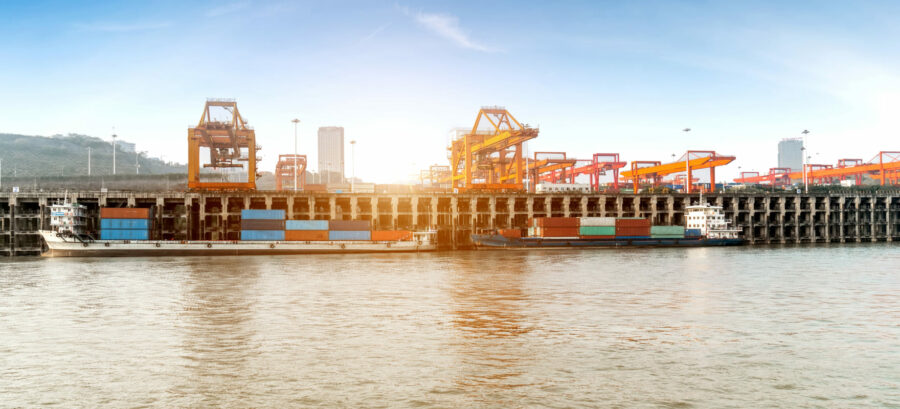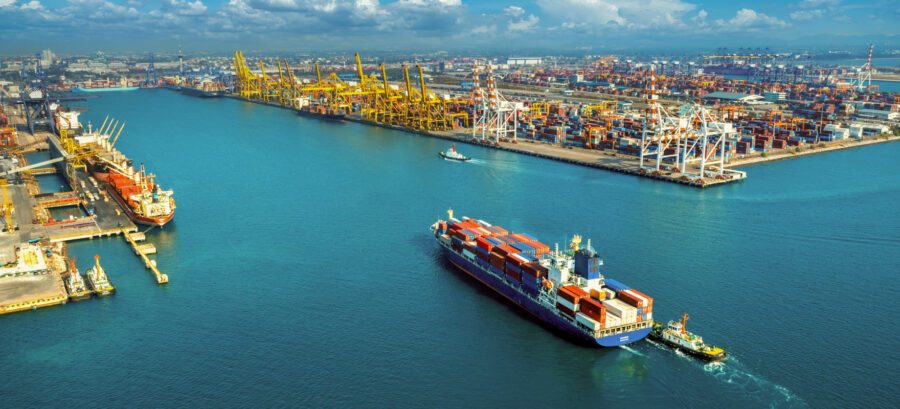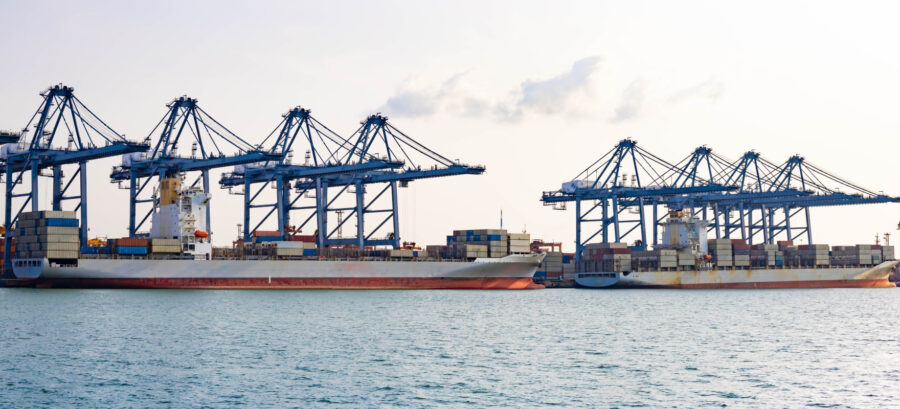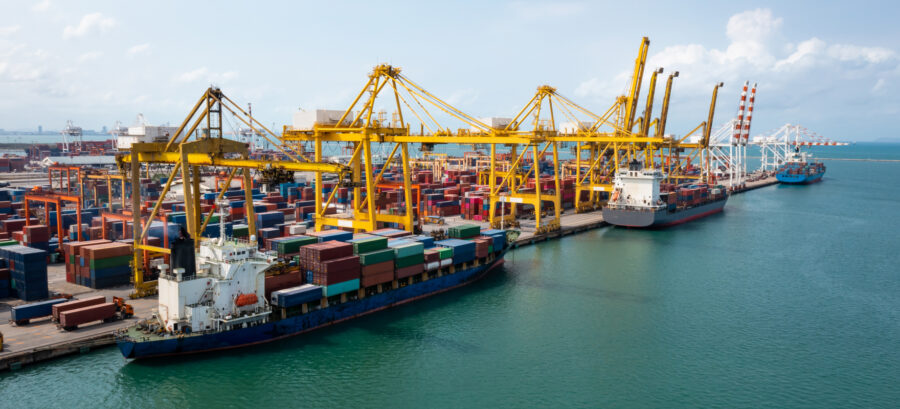
Let’s consider Türkiye as a high-load maritime hub
Türkiye plays a strategically important role in Black Sea, Mediterranean and global maritime logistics. Located between Europe, Asia and Midlle East , the country connects maritime routes, inland transport corridors, industrial supply chains and regional trade flows.
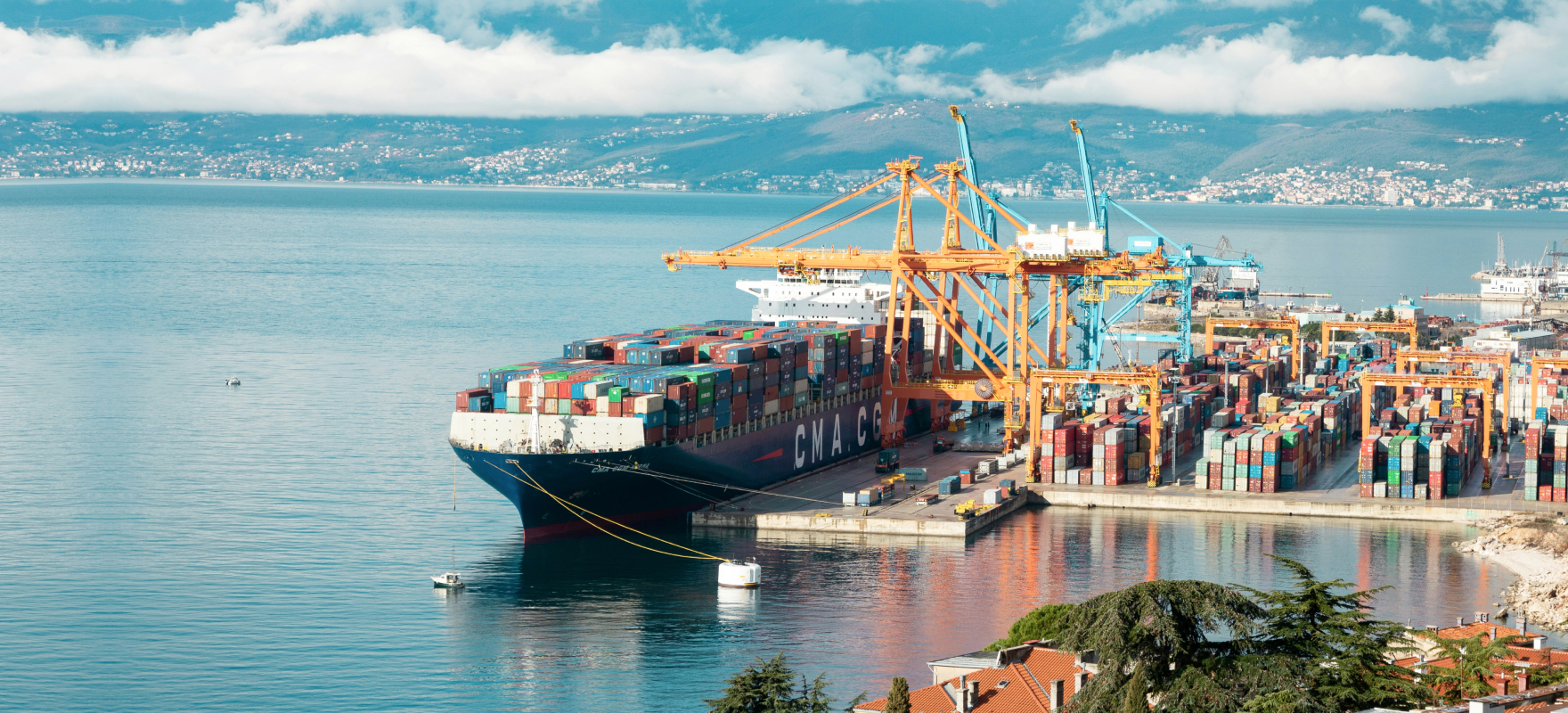
The scale of Türkiye’s own port system reinforces the regional relevance. According to TÜRKLİM Sector Statistics, Turkish ports handled 553.3 million tonnes of cargo in 2025, up from 531.7 million tonnes in 2024. Container throughput also increased from 13.5 million TEU in 2024 to 14.0 million TEU in 2025.
This growth confirms Türkiye’s position as a high-load maritime hub. But the structure behind the numbers is even more important.
Containers are not the whole story
Port digitalization is often discussed through the lens of container operations. This is understandable: container handling is highly standardized, data-rich and widely supported by mature automation practices.
However, Turkish port statistics show a much broader operational picture.
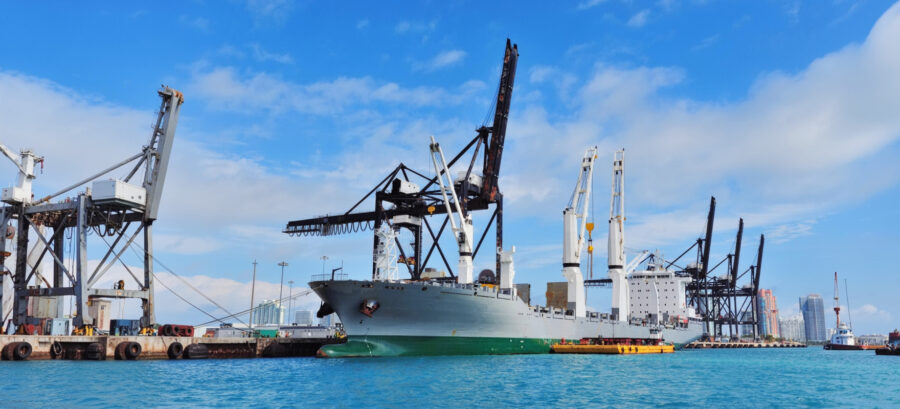
In 2025, liquid bulk was the largest cargo category handled in Turkish ports, with 169.7 million tonnes. Dry bulk followed with 160.9 million tonnes, while containerized cargo accounted for 144.3 million tonnes. General cargo reached 65.8 million tonnes, and vehicle / Ro-Ro cargo reached 12.4 million tonnes.
In other words, containers are a major flow — but not the dominant one by tonnage. For Türkiye and the wider Black Sea logistics context, port operations are shaped by several large cargo groups at once: energy-related liquid bulk, dry bulk, containerized cargo, general cargo, vehicles, Ro-Ro and corridor-related logistics. Thus, a container-first view of port technology can be too narrow for the region.
Cargo growth in 2025 was uneven
The 2025 results also show that Turkish port growth was not evenly distributed across cargo types.
According to Türkiye’s Ministry of Transport and Infrastructure, Turkish ports reached a record cargo volume in 2025 with 553,268,303 tonnes, a 4% increase year-on-year. The Ministry also reported that container handling grew by 3.5% to 14 million TEU.
But when cargo types are compared by tonnage, non-container segments grew faster than containerized cargo. Liquid bulk increased by 4.6%, dry bulk by 5.7%, general cargo by 6%, and Ro-Ro cargo by 4.7%, while containerized cargo increased by only 0.7%.
The Ministry also highlighted the cargo types with the largest absolute increases: coal, crude oil and LNG. Coal increased by 4.35 million tonnes, crude oil by 3.15 million tonnes, and liquefied natural gas by 3.08 million tonnes.
For port operators, this is a clear signal: energy flows, bulk cargo, industrial cargo and Ro-Ro traffic can shape operational pressure just as strongly as containers.
The load is shifting across port regions
The regional distribution of cargo in Türkiye also shows different patterns of pressure.
According to TÜRKLİM, the Marmara region handled 228.8 million tonnes in 2025, compared with 215.3 million tonnes in 2024. The Mediterranean region also grew, from 166.1 million tonnes to 176.0 million tonnes. At the same time, the Aegean region slightly declined from 105.9 million tonnes to 104.6 million tonnes, and the Black Sea region declined from 44.4 million tonnes to 43.8 million tonnes.
Container flows show an even sharper concentration. In 2025, Marmara handled almost 9.0 million TEU, up from 8.27 million TEU in 2024, while the Mediterranean region grew from 2.75 million TEU to 2.94 million TEU. The Aegean region declined from 2.38 million TEU to 1.94 million TEU, and the Black Sea region moved from 133,338 TEU to 127,132 TEU.
This uneven distribution matters because it shows that port systems do not grow as one uniform organism. Cargo pressure changes by region, by port authority, by cargo type and by transport mode.
Trade flows add another layer of complexity
Türkiye’s maritime trade also connects different international flows.
According to Türkiye’s Ministry of Transport and Infrastructure, in 2025 the largest outbound maritime cargo flows from Turkish ports went to Italy with 17.28 million tonnes, the United States with 13.52 million tonnes, and Egypt with 10.87 million tonnes. The largest inbound flows came from Russia with 101.56 million tonnes, the United States with 21.73 million tonnes, and Egypt with 14.35 million tonnes.
This creates a port environment connected to European, transatlantic, Middle Eastern, Russian-linked and regional Black Sea flows at the same time. Each of these flows may involve different cargo structures, vessel schedules, documentation requirements, safety regulations and operational priorities.
For Black Sea port logistics, that means flexibility is a key part of the operating model and not a mere secondary advantage.
Why multi-cargo flexibility matters
Ports working with such cargo diversity need systems that can manage more than one terminal logic.
A container terminal, a liquid bulk terminal, a Ro-Ro operation and a general cargo facility do not have the same operational rhythm. They require different planning horizons, equipment, documentation flows, storage rules, safety procedures and performance metrics.
For terminal operators, the practical question becomes: how can one digital environment support different cargo types and operating scenarios without fragmenting daily work?
Flexibility as the basis of port operations
Solvo.TOS is designed for ports and cargo terminals of different types and configurations. The system supports marine containers, bulk cargo, general cargo, Ro-Ro and vehicles, and helps automate operations across the vessel, rail, truck and yard fronts.
This approach is especially relevant for regions where non-container cargo plays a major role and where ports must work with several cargo flows at once.
For Türkiye and the Black Sea logistics environment, ports must be able to coordinate containerized and non-containerized cargo, imports and exports, cabotage, transit, industrial flows and corridor-related logistics in one operating environment.