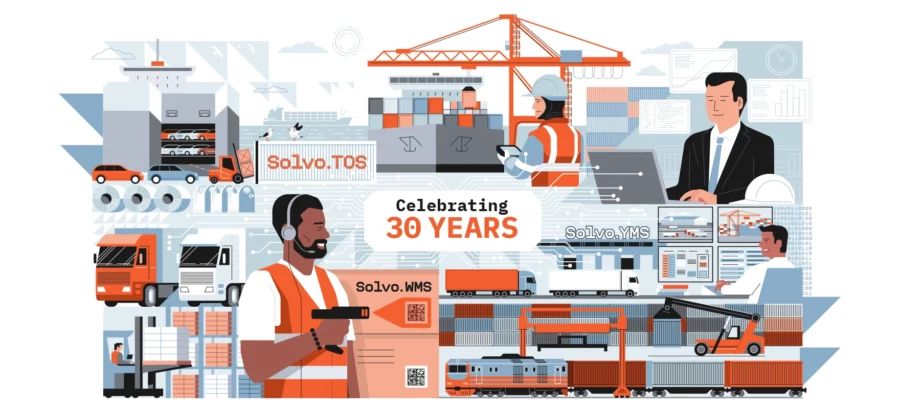
Understanding your logistics stack —
Modern supply chains rely on a growing set of digital systems — each designed for a specific layer of logistics. But as acronyms multiply, so does the confusion.
Among the most misunderstood? YMS — Yard Management System.
To understand what it does — and where it fits — let’s first clarify how it differs from its neighbors:
TMS — Transportation Management System
- What it does: Plans and optimizes the shipment’s journey from point A to point B.
- Focus: Carrier selection, route planning, freight rating, dispatching, tracking.
- Scope: Entire transportation network — truck, rail, air, sea.
WMS — Warehouse Management System
- What it does: Manages inventory and movement inside the warehouse.
- Focus: Storage locations, order picking, replenishment, cycle counting.
- Scope: Everything from inbound receiving to outbound packing — inside the four walls.
YMS — Yard Management System
- What it does: Orchestrates everything between the gate and the dock.
- Focus: Truck flow, dock scheduling, access control, yard visibility.
- Scope: The physical yard — where trucks arrive, wait, park, get loaded/unloaded, and depart.
If TMS is the navigator and WMS is the stockroom brain, then YMS is the orchestra conductor for on-site movement.
Why YMS matters more than ever
At many facilities, the yard remains a digital blind spot. Traffic piles up. Drivers miss appointments. The warehouse is ready, but the truck isn’t. Security is overwhelmed. Neighbors complain. And eventually — carriers start invoicing for delays.
These problems don’t happen in the WMS or the TMS — they happen in the yard.
3 signs your facility needs a YMS
Not sure if YMS is worth the investment? Here are three red flags to watch for:
1. Long vehicle queues outside your facility
If trucks are lining up on nearby streets, causing complaints — or your team is mediating driver disputes at the gate — you’ve outgrown manual yard control.
2. Missed loading slots and “lost” trucks
You prepared the goods, but the assigned truck missed its slot — or worse, it’s in the yard but parked in the wrong place, unnoticed.
3. Penalties for delays
Carriers invoice you for idle time. SLAs are breached. The cost of inaction begins to show up on your P&L.
What Solvo.YMS brings to the yard
Solvo.YMS is built to eliminate chaos in the yard and turn traffic into flow. It bridges the “last 500 meters” between your gate and your dock.
Here’s how it works:
- Gate control and access management. Integrates with license plate recognition, weighbridges, and security systems to control inbound traffic.
- Dock scheduling and enforcement. Assigns and enforces loading/unloading time windows based on cargo, carrier, and capacity.
- Real-time vehicle tracking. Monitors truck location and status at every checkpoint in the yard.
- Automated routing and communication. Guides drivers to the correct dock and notifies warehouse teams of incoming vehicles.
- Full operational traceability. Logs who did what, where, when, and why — down to each truck and driver.
Who benefits most from a YMS?
Yard management becomes critical in facilities where:
- There are multiple docks or loading zones
- Inbound/outbound volumes are high or unpredictable
- The yard layout includes multiple zones or public roads
- Trucks must be processed with minimal idle time
- Teams need real-time visibility to avoid resource conflict
Typical sectors include retail distribution centers, manufacturing plants, FMCG warehouses, and industrial sites with shared or dynamic yards.
Ready to bring clarity to your yard?
Solvo.YMS gives you the tools to control the uncontrolled — from truck arrivals to dock efficiency to outbound visibility.
Whether you’re managing palletized goods or bulk cargo, Solvo.YMS provides the coordination and transparency you need to keep operations moving smoothly — and keep costs in check.