Choosing the right warehouse management model starts with understanding your needs and risks!
In today’s fast-paced and unpredictable environment, businesses of all sizes are searching for warehouse management systems that offer speed, accuracy, and flexibility — especially during times of uncertainty like the COVID-19 era. While cloud-based WMS solutions are gaining traction due to their simplicity and budget-friendliness, it’s essential to understand their limitations and alternatives.
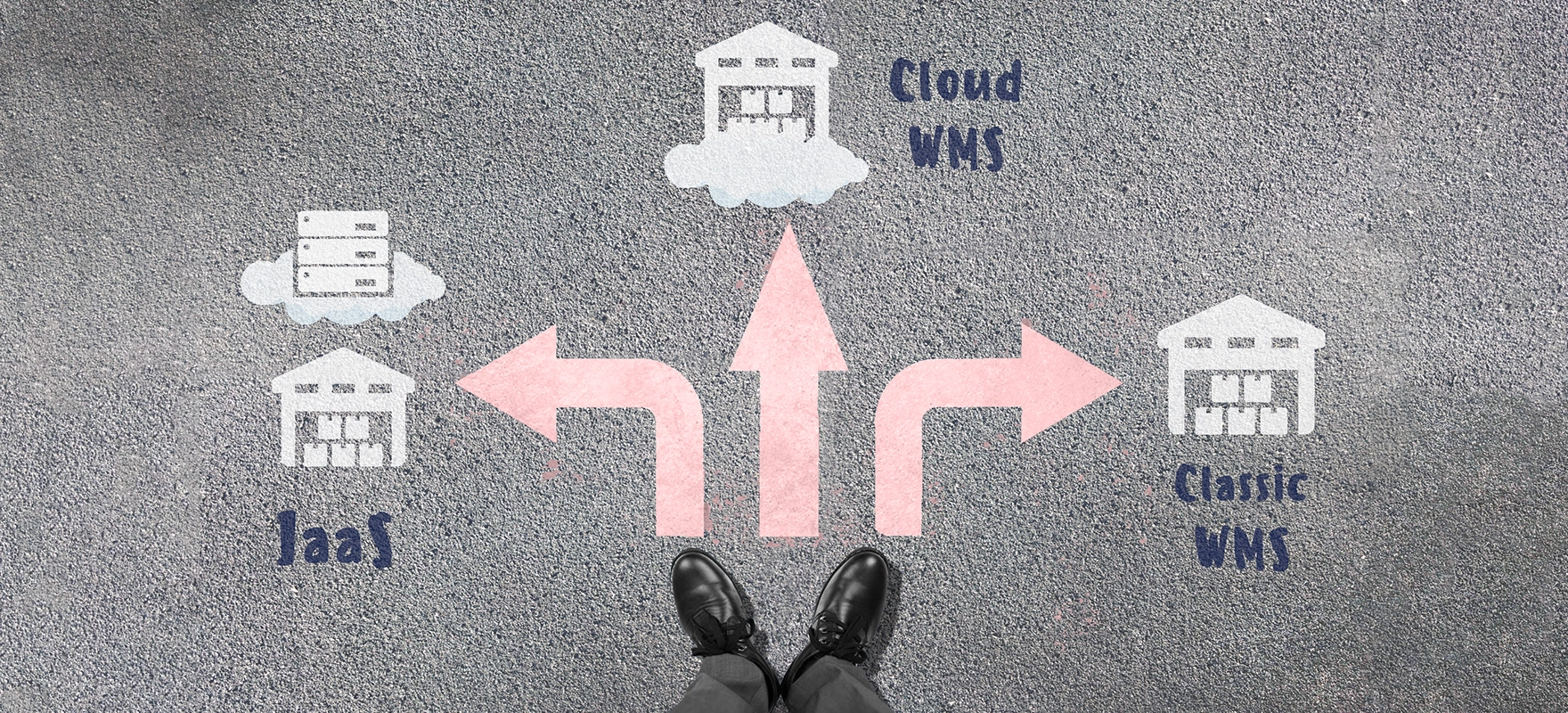
Let’s explore the three main types of WMS infrastructure and compare their pros and cons to help you decide what works best for your warehouse.
Three Types of Cloud Infrastructure
- Private Cloud – Classic WMS: Fully owned and operated by the company, hosted on-premises or via rented servers. Offers maximum control.
Imagine owning a car with your own trailer and GPS — full control over everything.
- Public Cloud – Cloud WMS (SaaS): Hosted by a provider and shared among multiple users. Offers flexibility and scalability.
Like carsharing — everything is rented and shared. Easy to start, but less control.
- Hybrid Cloud – WMS + IaaS: A mix of private infrastructure and public cloud services, balancing control and convenience.
You own the car but rent the trailer and GPS — combining ownership with outsourced infrastructure.
Comparative Overview: 5 Key Criteria
-
Data Security
- Classic WMS: Highest security — all data is on internal servers. Risks are minimal if proper access control is maintained.
- WMS + IaaS: Also secure — data is stored locally, with processing handled in the cloud.
- Cloud WMS: Most vulnerable — data is stored in a shared cloud environment. Requires a trustworthy provider with strong protection policies.
-
System Stability
- Classic WMS: Operates independently of the internet. Ideal for manufacturing warehouses where uptime is critical.
- WMS + IaaS: Depends on the stability of both internet and the cloud provider, but can fall back on local servers in emergencies.
- Cloud WMS: Highly dependent on internet and provider stability. Downtime means halted operations.
-
Customization Potential
- Classic WMS: Fully customizable for your workflows, hardware, and processes.
- WMS + IaaS: Same benefits as classic WMS with outsourced infrastructure.
- Cloud WMS: Limited customization — mostly pre-packaged solutions. Custom modules are hard to add.
-
Long-Term Scalability
- Classic WMS: Easier to upgrade and scale. Migration to new systems can be complex and costly.
- WMS + IaaS: Offers flexibility and easier IT scaling thanks to cloud resources.
- Cloud WMS: May not meet future needs as business grows — limited expandability.
-
Cost Considerations
- Classic WMS: Higher upfront cost — but it’s a long-term investment with full ownership.
- WMS + IaaS: Comparable system cost to Classic WMS, with savings on IT infrastructure.
- Cloud WMS: Lower initial cost via subscription — but additional integration and deployment costs may offset savings.
Which Model Is Right for You?
Choose Classic WMS If:
- You operate a medium or large warehouse
- Your company follows a strict security policy
- You require deep customization
- You prefer complete ownership of your system
Solvo.WMS is available as a standalone system or as part of the Solvo.SCE platform, which unites TOS, WMS, yard management, billing, and customer interaction tools.
Choose WMS + IaaS If:
- You want a balance between customization and cloud efficiency
- You aim to save on IT infrastructure costs
- You expect to scale operations in the future
- You prefer to outsource infrastructure maintenance
Solvo.WMS with IaaS combines local control with cloud-powered agility, ideal for growing businesses.
Choose Cloud WMS (SaaS) If:
- You have a small, simple warehouse
- You need only basic WMS features
- You’re launching a new business and want to avoid large upfront costs
Cloud WMS lets you explore automation without commitment — but keep in mind the trade-offs in security, flexibility, and ownership.
Final Thought
Cloud WMS solutions may be trending, but they’re not one-size-fits-all. Before deciding, evaluate your security requirements, operational complexity, and growth trajectory. And remember — even cloud systems need solid integration and thoughtful planning to truly support your business.